
Industry: Different industries face varying levels of regulation and risk. For example, industries with high cash transactions (like hair saloons) may have more opportunities for tax evasion compared to highly regulated sectors like finance.
Business: The size, structure, and internal practices of a business can influence tax compliance. For instance, businesses with strong governance and accounting systems are more likely to comply with tax laws.
Sociological: Social norms, peer influence, and cultural expectations shape how individuals view tax obligations. If tax compliance is seen as a social duty, people are more likely to comply.
Economic: Economic conditions such as income levels, inflation, or financial stress can affect a taxpayer’s ability and motivation to comply.
Psychological: Factors like trust in government, perceived fairness of the tax system, and fear of penalties influence taxpayer attitudes and decisions.
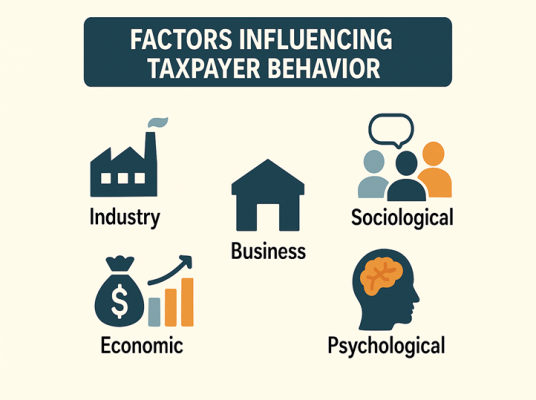
Industry: Different industries face varying levels of regulation and risk. For example, industries with high cash transactions (like hair saloons) may have more opportunities for tax evasion compared to highly regulated sectors like finance.
Business: The size, structure, and internal practices of a business can influence tax compliance. For instance, businesses with strong governance and accounting systems are more likely to comply with tax laws.
Sociological: Social norms, peer influence, and cultural expectations shape how individuals view tax obligations. If tax compliance is seen as a social duty, people are more likely to comply.
Economic: Economic conditions such as income levels, inflation, or financial stress can affect a taxpayer’s ability and motivation to comply.
Psychological: Factors like trust in government, perceived fairness of the tax system, and fear of penalties influence taxpayer attitudes and decisions.
Industry: Different industries face varying levels of regulation and risk. For example, industries with high cash transactions (like hair saloons) may have more opportunities for tax evasion compared to highly regulated sectors like finance.
Business: The size, structure, and internal practices of a business can influence tax compliance. For instance, businesses with strong governance and accounting systems are more likely to comply with tax laws.
Sociological: Social norms, peer influence, and cultural expectations shape how individuals view tax obligations. If tax compliance is seen as a social duty, people are more likely to comply.
Economic: Economic conditions such as income levels, inflation, or financial stress can affect a taxpayer’s ability and motivation to comply.
Psychological: Factors like trust in government, perceived fairness of the tax system, and fear of penalties influence taxpayer attitudes and decisions.
To better serve all our customers, FRCS aligns its approach with the four pillars of customer segmentation:

🙂Voluntary Compliant
These taxpayers are willing and able to meet their tax obligations. They proactively register, file returns accurately, and pay taxes on time. They understand the importance of compliance and seek to maintain a good relationship with us.
Common Profiles:
- Large and medium-sized businesses with strong internal controls and accounting systems.
- Long-standing taxpayers with consistent lodgement and payment history.
- Entities with a strong compliance culture.
Compliance Treatment:
- Priority processing of refunds and returns. Gold card services.
- Access to dedicated service channels (e.g., priority call lines or appointment-based support).
- Tailored guidance and reminders for upcoming obligations.
- Less frequent audits or simplified review processes due to demonstrated compliance history.
- Recognition programs or incentives such as inclusion in fast-track lanes (e.g., Customs green lane clearance).
- Focus: Building relationships and trust rather than enforcement. Continue delivering education and awareness sessions to support and empower our customers.
😕Unfamiliar
Taxpayers in this category are willing to comply but lack the necessary knowledge, support, or resources to meet their obligations consistently. They often operate informally or are new to the tax system.
Common Profiles:
- Micro and small businesses.
- Sole traders, informal operators (e.g., market vendors, small-scale contractors).
- Taxpayers in rural / outer island areas with limited access to FRCS services.
Compliance Treatment:
- Education and outreach: Sector-specific campaigns, mobile tax units, regional seminars/workshops and guidelines.
- Simplified services: Pre-filled returns, and checklists.
- Ongoing support: Dedicated MSME advisory units and help desks.
- Focus: Increase confidence and build voluntary compliance capacity.
😠Negligent
These taxpayers have the capacity to comply but are either careless or inconsistent. They frequently file late, miss payments, or ignore reminders. Their behaviour may not be malicious but creates administrative burdens and tax loss.
Common Profiles:
- Businesses with poor record-keeping.
- Entities with weak internal controls.
- Taxpayers who file NIL returns without proper justification.
Compliance Treatment:
- Targeted nudges: Automated email reminders, telephone calls and other timely communications.
- Soft enforcement: Penalty warnings, deadline flags, follow-up calls and inspections.
- Risk scoring: Monitoring of filing/payment patterns for early detection.
- Focus: Promote consistent tax compliance habits and reduce resistance to filing through timely reminders and proactive engagement.
😈Evaders
This group actively seeks to evade taxes and duty and manipulate the system. They may under-report income, overstate expenses, operate without registration, or engage in fraudulent VAT refund claims.
Common Profiles:
- Businesses with undeclared revenue streams.
- Entities linked to money laundering or offshore fund transfers.
- Entities engaged in tax and duty evasion schemes.
Compliance Treatment:
- Full enforcement: Risk-based audits, investigations, penalties and legal action.
- Information sharing: Coordination with the Fiji Financial Intelligence Unit, World Customs Organization, Registrar of Companies, Fiji Police Force and other third parties.
- Prosecution: Strong deterrent action to reinforce trust in the system.
- Focus: Deter evasion and recover lost revenue through legal channels.
Last Updated - May 7, 2026