Fiji Strengthens Border Security with Launch of Advanced CCTV Capability and Multi-Purpose Facility at Nadi International Airport

The Fiji Revenue and Customs Service (FRCS) today marked a major milestone in strengthening Fiji’s border security with the official inauguration of the new CCTV Capability and Multi-Purpose Room at Nadi International Airport, delivered through the support of the Government of Australia under the Vuvale Partnership Program.

Funded by the Australian Government through the Australian Border Force (ABF), the state-of-the-art facility is designed to enhance Fiji’s border protection capabilities through real-time surveillance, improved threat detection, and more effective incident response. The new capability will strengthen coordination among border agencies, improve monitoring of airport operations and restricted areas, and support training, operational planning, and intelligence-led border management.

Officially inaugurating the facility, Australian High Commissioner to Fiji, His Excellency Peter Roberts OAM, said the project reflects the strong and enduring partnership between Fiji and Australia. “As Vuvale, Fiji and Australia work together on the issues that matter most to our people. This is another example of our countries working side by side to strengthen border security, build capability and address transnational crime,” said High Commissioner Roberts.

FRCS Chief Executive Officer, Mr. Udit Singh described the facility as a significant investment in Fiji’s national security and border management framework. “The facility inaugurated today represents much more than a modern surveillance and monitoring centre. It embodies our ongoing commitment to innovation, operational excellence, and collaborative border management, while strengthening our collective capacity to safeguard Fiji’s borders and national security,” Mr. Singh said.

Mr. Singh expressed FRCS’s sincere appreciation to the Government of Australia and the Australian Border Force for their continued support through the Vuvale Partnership. “This initiative reflects the depth and strength of our enduring relationship, underpinned by mutual respect, shared strategic interests, and a common commitment to advancing the security, stability, and prosperity of Fiji and our region.”

He also acknowledged the invaluable contributions of FRCS’s border management partners, including the Fiji Immigration Department, Fiji Police Force, Biosecurity Authority of Fiji – BAF, Fiji Airports Limited, the Republic Of Fiji Navy, and other agencies working collectively to protect Fiji’s borders. “As we confront increasingly complex threats, including illicit trafficking, smuggling, and transnational organised crime, our success depends on strong collaboration, effective information sharing, and a coordinated approach to border security,” he said.

The CEO noted that the new capability will significantly enhance situational awareness, strengthen frontline operations, and improve the ability of border agencies to identify, assess, and respond to emerging risks in a timely manner. “The capability we launch today represents a significant step forward in strengthening Fiji’s border security. It will enhance our situational awareness, strengthen frontline operations, and improve our ability to identify, assess, and respond to emerging risks. Just as importantly, it will support better coordination and more timely decision-making across partner agencies.”

As Fiji continues to grow as a regional hub for tourism, aviation, trade, and commerce, Mr. Singh emphasized the importance of remaining intelligence-led, risk-focused, technologically enabled, and united in addressing the evolving challenges facing border agencies.

Australian Border Force Superintendent Uriah Turner reaffirmed the strong partnership between the ABF and FRCS, highlighting their shared commitment to combating border-related threats and enhancing regional security. “The ABF and the Fiji Revenue and Customs Service maintain a close and productive partnership, working together on border security priorities, information sharing, and efforts to detect and disrupt border-related threats. The provision of this equipment and these enhanced capabilities will significantly strengthen our Fiji colleagues’ ability to identify and respond to threats at the border, further supporting regional security and cooperation.”

ABF has continued to support FRCS through specialised equipment, operational tools, technical expertise, and capability-building programmes that have strengthened the effectiveness of frontline officers. Training and professional development opportunities delivered over the years have played a critical role in enhancing border enforcement, intelligence gathering, and risk management capabilities.

The inauguration of the CCTV Capability and Multi-Purpose Room represents another tangible outcome of the Vuvale Partnership and reinforces the shared commitment of Fiji and Australia to safeguarding borders, combating transnational crime, and promoting a secure and prosperous Pacific region.

Strengthening Fiji’s Frontline Defenders at the Port of Suva

FRCS Maritime and Outer Ports Team recently delivered a border security awareness session for Port of Suva Security Officers and Grid Guards, highlighting the critical role they play in safeguarding Fiji’s gateways.

The interactive session enhanced knowledge and awareness across several key border security areas, including:

  • Insider Threat Detection and Prevention
  • Supply Chain Security Checks
  • Customs Legislative Powers
  •  Customs Control Areas and Access Procedures
  • Types of Container Seals
  •  Container Tampering Indicators
  •  International Ship and Port Facility Security (ISPS) Standards

As the first line of defence at our ports, security personnel are essential in maintaining the integrity of Fiji’s borders, facilitating secure trade, and ensuring the safe movement of people and goods.

Through initiatives like these, FRCS continues to strengthen partnerships, build capacity, and foster greater collaboration with key stakeholders and partner agencies. Together, we are enhancing our collective ability to detect risks, prevent illicit activities, and protect Fiji’s economic and national security interests.

Strong Borders. Trusted Partnerships. Secure Futures.

FRCS remains committed to working hand-in-hand with our partners to safeguard Fiji’s borders through vigilance, professionalism, and a shared commitment to security

FRCS and Australian Border Force Reaffirm Commitment to Stronger Border Security Cooperation

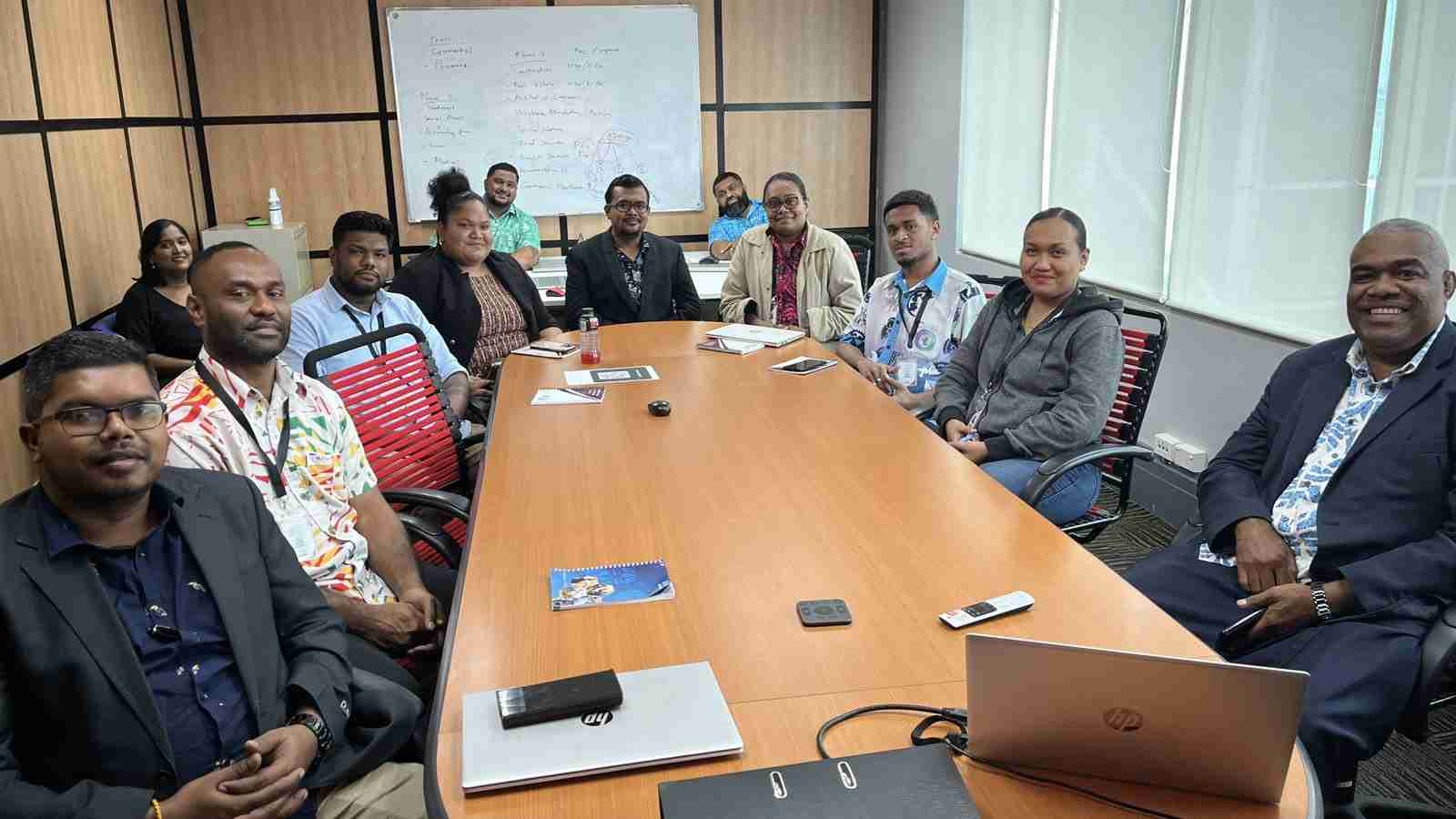
The Fiji Revenue and Customs Service (FRCS) and the Australian Border Force (ABF) have reaffirmed their shared commitment to strengthening border security, customs capability and regional cooperation between Fiji and Australia.

During a recent bilateral meeting, representatives from both agencies reviewed progress under the existing Memorandum of Understanding and discussed ongoing and future areas of cooperation aimed at enhancing Fiji’s border management and operational capability.

Key areas of discussion included the Container Examination Facility project, support for FRCS maritime vessels and associated training, integrity initiatives, the risk assessment of the Nadi Parcel Post, and a range of current and proposed capacity-building programmes.

The meeting also highlighted ABF’s continued technical and operational support to Fiji Customs in areas including maritime enforcement, intelligence development, digital forensic capability, trade-based money laundering, and specialised officer training.

This partnership continues to strengthen the capability and readiness of FRCS officers to identify, assess and respond to emerging border risks, transnational organised crime, and threats within Fiji’s maritime domain.

FRCS and ABF acknowledged the importance of sustained cooperation, information sharing and capability development in protecting national borders, facilitating legitimate trade and travel, and promoting security across the wider Pacific region.

Both agencies remain committed to building on their longstanding partnership and identifying further opportunities for practical cooperation and mutual support.

FRCS Records Highest Annual Revenue Collection to Date

The Fiji Revenue and Customs Service (FRCS) has collected net revenue of $3.510 billion for the financial year ended 31 July 2026—the highest annual revenue collection recorded by the Service.

The result is $136.2 million, or 4.0 per cent, above the Government’s annual forecast of $3.374 billion. It is also $25.8 million, or 0.7 per cent, higher than the $3.485 billion collected in the previous financial year.

FRCS Chief Executive Officer Mr Udit Singh said the result demonstrated the resilience of Fiji’s economy despite geopolitical uncertainty, international fuel-supply pressures, imported inflation and softer expectations for tourism and consumer activity.

“This record result reflects the strength of Fiji’s underlying business and employment base. Businesses continued to operate and contribute, employers-maintained jobs and wages, trade remained active, and taxpayers continued to support the country despite a challenging economic environment,” Mr Singh said.

Growth was led by Net Income Tax, which increased by $53.7 million, Net Customs collections, which increased by $46.6 million, and Departure Tax, which increased by $43.7 million.

Within these categories, PAYE increased by $37.9 million and Company Income Tax rose by $28.3 million. These results point to continued resilience in formal employment, wages, and business profitability. Fiscal Duty, Domestic Excise Duty, Withholding Tax, and Import Excise Duty also recorded positive annual growth.

Net VAT declined by $102.8 million compared with the previous year, principally reflecting the reduction in the VAT rate from 15 per cent to 12.5 per cent, together with refund and payment-timing effects. The decline should therefore not be interpreted as an equivalent reduction in underlying economic activity.

The July collection was $288.8 million, which was $16.6 million below forecast and $22.3 million below July 2025. The softer monthly result was influenced by the timing of Company Income Tax payments and higher refunds. Nevertheless, the strong performance over the preceding eleven months enabled FRCS to finish the year well above its annual forecast.

Mr Singh said the result was broadly consistent with the Reserve Bank of Fiji’s assessment that the economy continues to grow, although at a slower pace and with elevated risks from fuel prices, inflation, and global uncertainty.

“We should view this achievement with confidence but not complacency. The economic risks remain real, but the breadth of the revenue result shows that Fiji enters the new financial year with a resilient economic and fiscal foundation.”

Mr Singh thanked Fiji’s taxpayers, businesses, employers, importers, exporters, customs brokers, and tax agents for their contribution.

“This achievement belongs first and foremost to Fiji’s taxpayers. Every dollar collected supports essential public services, including healthcare, education, infrastructure, social assistance, and border protection.”

“I also thank the FRCS Board for its leadership and governance, our staff for their professionalism and commitment, and the Government, Ministry of Finance, Reserve Bank of Fiji and our partner agencies for their continued cooperation and support.”

KEY HIGHLIGHTS

• Net revenue: $3.510 billion

• Highest annual collection recorded by FRCS

• Above annual forecast: $136.2 million, or 4.0 per cent

• Above the previous financial year: $25.8 million, or 0.7 per cent

• July 2026 net revenue: $288.8 million

FRCS Issues Strong Warning on Fraudulent Tax Certificates and Fake Cancellation Notices

The Fiji Revenue and Customs Service (FRCS) has detected the circulation of fraudulent Tax Clearance and Tax Compliance Certificates (TCCs), as well as fake letters falsely claiming that legitimately issued certificates have been cancelled due to a system error.

FRCS advises that these documents are fraudulent, unauthorised, and do not originate from the Service. The creation, distribution, possession, use, or presentation of false tax documents may constitute serious criminal offences and may result in investigation and prosecution under the applicable laws of Fiji. Offenders may face substantial fines, imprisonment, or both.

FRCS is urging businesses, government ministries and departments, statutory bodies, financial institutions, procurement entities, and members of the public to exercise extreme caution and independently verify the authenticity of any certificate purportedly issued by FRCS before relying on it for any official purpose.

FRCS also wishes to clarify that it does not cancel, revoke, or invalidate Tax Clearance or Tax Compliance Certificates through informal emails, third-party correspondence, or unverified letters. Any change to the status of a certificate is reflected through FRCS’s official systems and can be verified via the FRCS Taxpayer Online Services Certificate Validation Portal.

FRCS Chief Executive Officer, Mr Udit Singh, said the Service takes any attempt to undermine the integrity of Fiji’s tax administration system very seriously. “The circulation of fake tax certificates and fraudulent cancellation notices is a deliberate attempt to deceive businesses, government agencies, and the public. FRCS will not tolerate any activity that compromises the integrity of our systems and processes.”

Mr Singh stressed the importance of verifying certificates through official channels before accepting them as valid. “We strongly urge all organisations and individuals not to accept any tax certificate at face value. Verification should be undertaken immediately through our official certificate validation portal or directly with FRCS.”

Mr Singh further advised organisations that encounter suspicious certificates to take immediate precautionary measures. “Where a fraudulent or suspicious certificate is identified, organisations should retain a copy of the document, suspend or pause the relevant transaction or process, and report the matter immediately to FRCS together with details of the individual or entity that submitted the document.”

He further warned that those involved in producing, distributing, possessing, or using fraudulent tax documents could face significant legal consequences. “Any person found to be producing, distributing, possessing, or using fraudulent tax documents will be subject to investigation and appropriate action under the law. These activities may constitute serious criminal offences, and FRCS will work closely with relevant enforcement agencies to ensure those responsible are held accountable.”

FRCS encourages any person who receives a suspicious certificate, cancellation notice, or related correspondence to report the matter immediately.

Verify Before You Rely

Stakeholders can verify the authenticity of Tax Clearance and Tax Compliance Certificates through the official FRCS Certificate Validation Portal:

https://tpos.frcs.org.fj/certificatevalidator/index.html

FRCS strongly encourages all organisations and individuals to complete this verification process before accepting any certificate for business, procurement, regulatory, financial, or administrative purposes.

Need Assistance?

For further assistance, contact FRCS through the following channels:

Toll-Free: 1326

Phone: 324 3000

Email: info@frcs.org.fj

Visit: Your nearest FRCS office

FRCS remains committed to protecting taxpayers, safeguarding the integrity of its systems, and maintaining public confidence in Fiji’s tax administration framework. All stakeholders are encouraged to verify tax certificates through official FRCS channels and promptly report any suspicious documents or correspondence.

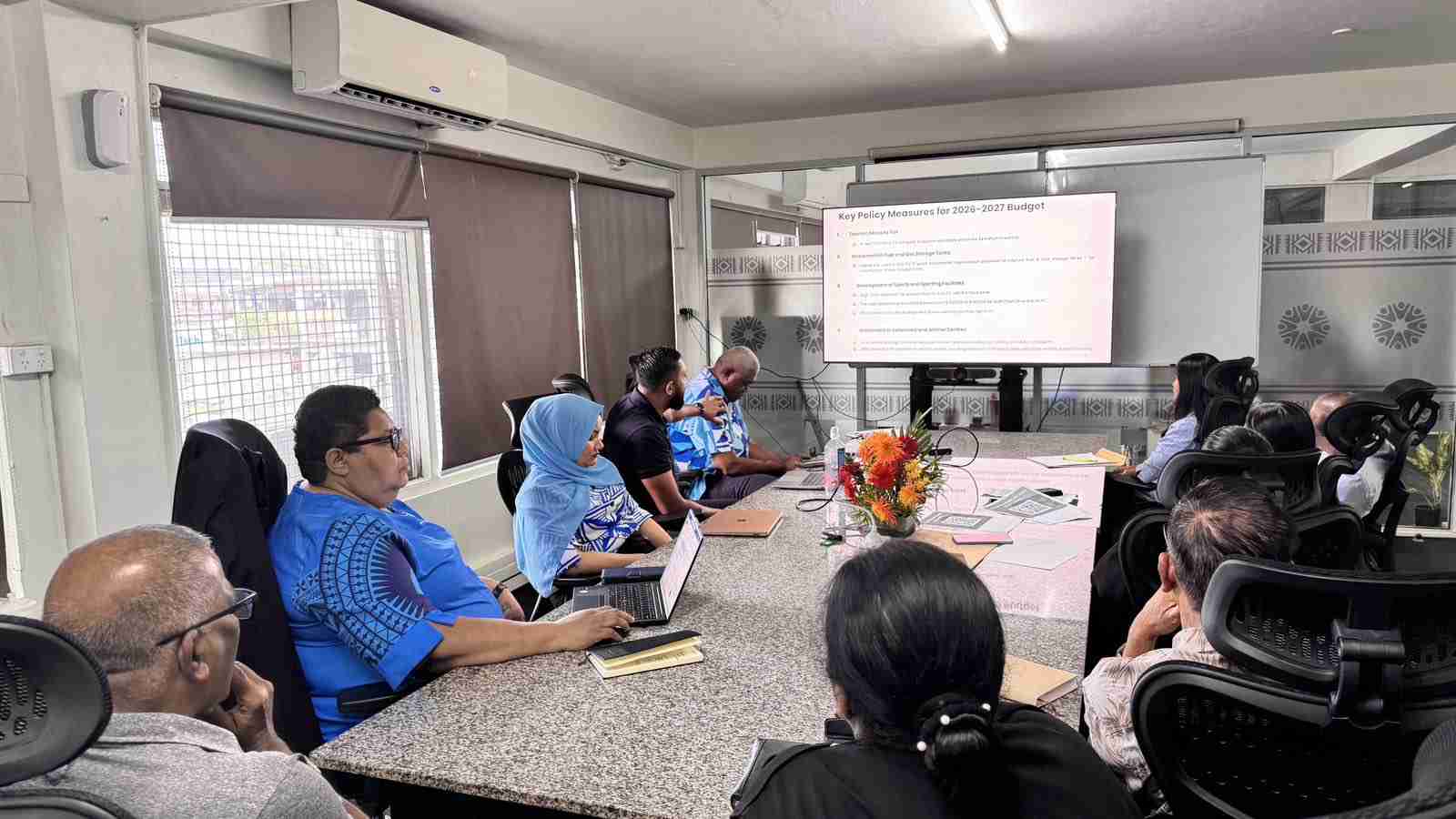
FRCS Engages Customs Brokers on the 2026/2027 National Budget Measures

FRCS recently hosted a Customs Broker forum at the Suva Port by virtually connecting Suva and Nadi Port to provide an awareness on the 2026/2027 National Budget and requirements for importation of the prefabricated home.

The forum formed part of FRCS’ ongoing commitment to strengthening collaboration and engagement with key stakeholders. Customs Brokers remain valued partners in supporting Fiji’s trade environment, playing a critical role in facilitating efficient, transparent, and compliant import and export processes. FRCS recognises that strong partnerships are essential to achieving national economic and revenue objectives.

During the session, FRCS senior officials provided detailed briefings on budgetary and revenue policy measures relevant to Customs Brokers. The forum served as a platform for open dialogue, technical clarification, and the exchange of insights to support a shared understanding of the new fiscal policies and their practical implications.

A key focus of the discussion was on tariff and duty adjustments, including duty concessions, customs tariff reductions, and other revenue measures introduced under the 2026/2027 National Budget. Participants also received updates on compliance requirements and ongoing transformation initiatives aimed at improving service delivery and operational efficiency.

Attendees were given the opportunity to engage directly with FRCS officials, seek clarification on specific matters, and receive tailored guidance on customs and taxation-related issues. The engagement fostered constructive discussions, enhanced stakeholder understanding, and reinforced the spirit of partnership between FRCS and the customs brokerage community.

The forum also provided Customs Brokers with an avenue to raise operational concerns, explore practical solutions to customs and tax challenges, and gain expert advice from FRCS specialists.

FRCS remains committed to supporting businesses and stakeholders through ongoing awareness and engagement initiatives. These efforts are designed to ensure that stakeholders remain well-informed, prepared, and equipped for the effective implementation of the 2026/2027 National Budget revenue policies and related reforms.

FRCS Celebrates MSME Day 2026, Honouring Business Growth, Compliance and Entrepreneurial Success

The Fiji Revenue and Customs Service (FRCS) today celebrated a major milestone in its ongoing commitment to empowering Micro, Small and Medium Enterprises (MSMEs), hosting a vibrant MSME Day 2026 event in Suva that highlighted the achievements, resilience, and growth of Fiji’s small business community.

The event was attended by the Deputy Representative of the UN Women Fiji Multi-Country Office, Ms. Eri Taniguchi, who commended the significant progress made by Fiji’s MSME sector and recognized the positive impact of partnerships that support entrepreneurs, particularly women-led businesses.

A total of 252 MSMEs from the FRCS MSME Business Community were presented with certificates in recognition of their dedication to business development, compliance, and continuous learning. Among them, 39 MSMEs successfully completed a comprehensive three-year training and coaching programme, graduating as independent businesses that are fully compliant with tax and customs requirements.

Recognising the strong partnership between FRCS and UN Women through the Markets for Change Project, Ms. Taniguchi highlighted the shared commitment to creating an enabling environment for women entrepreneurs and market vendors throughout Fiji.

“For many years, UN Women’s Markets for Change Programme has worked in close partnership with municipal councils, market vendor associations, government agencies and community leaders to improve the socio-economic security of women market vendors,” said Ms. Taniguchi.

“Central to this work has been empowering women with knowledge, skills, leadership opportunities and access to markets and services that enable them to grow their businesses with confidence.”

“FRCS has been an important partner in this journey. Through its engagement with market vendors and MSMEs, FRCS has helped increase awareness of tax obligations, business registration processes, financial literacy, and the importance of formalising businesses.”

FRCS Director Taxation, Ms. Momina Beg, said the organisation has trained more than 6,000 MSMEs across Fiji over the past four years, demonstrating FRCS’ strong commitment to supporting and strengthening the small business sector.

“This achievement reflects our dedication to educating, supporting and empowering MSMEs while building trust and confidence in tax and customs processes,” said Ms. Beg.

“By helping businesses understand their obligations and access the right support, we are creating pathways for sustainable growth and enabling MSMEs to make a greater contribution to Fiji’s economic development.”

As part of the celebration, FRCS also launched its MSME Newsletter and a new Frequently Asked Questions (FAQ) Guide for MSMEs, further strengthening its efforts to make business and compliance information more accessible.

The newsletter marks another important step in FRCS’ journey to educate, engage and build stronger relationships with MSMEs by providing timely updates, practical information, and success stories from the business community.

The FAQ Guide has been designed as a practical resource for aspiring and existing business owners, addressing common questions about starting and operating a business. Topics include business registration, tax obligations, record keeping and lodging income tax returns, providing entrepreneurs with clear and accessible guidance at every stage of their business journey.

The guide reflects FRCS’ commitment to simplifying tax and customs information and ensuring that every entrepreneur has the knowledge, confidence and tools needed to establish and grow a successful business.

The event also featured inspiring testimonials from MSME owners and partners, who shared how FRCS training programmes helped transform their businesses from informal operations into structured enterprises with sound financial management practices and clear growth strategies.

As MSME Day 2026 celebrations concluded, FRCS reaffirmed its commitment to supporting Fiji’s entrepreneurs through continued education, innovative digital solutions, and personalised coaching, ensuring MSMEs remain a driving force in the nation’s economic growth and prosperity.

FRCS and Japan Customs Sign Memorandum of Cooperation to Strengthen Capacity Building

The Fiji Revenue and Customs Service (FRCS) and the Customs and Tariff Bureau of the Ministry of Finance of Japan have signed a Memorandum of Cooperation (MOC), establishing a new framework of technical cooperation between the two customs administrations.

Under the agreement, Japan Customs will assign a dedicated Liaison Officer for Capacity Building (LOCB) to Fiji. This marks a significant step in deepening the longstanding relationship between the two organizations and reinforces Japan’s continued support for customs modernization across the Pacific.

The signing of the MOC reflects the shared commitment of both FRCS and Japan Customs to strengthening customs capabilities across the region. This agreement builds on Japan’s broader engagement with the Pacific region through initiatives such as the Pacific Islands Leaders Meeting (PALM) framework and complements ongoing regional efforts to harmonise customs standards and practices.

The LOCB will serve as the primary point of contact between FRCS and Japan Customs on all matters relating to technical cooperation. By stationing a dedicated liaison officer in Fiji, Japan Customs aims to provide more direct, sustained, and responsive support allowing capacity building initiatives to be better tailored to the specific needs of FRCS.

FRCS has welcomed the partnership as an opportunity to enhance staff expertise, adopt international best practices, and further align its operations with global customs standards.