Fiji Strengthens Border Security with Launch of Advanced CCTV Capability and Multi-Purpose Facility at Nadi International Airport

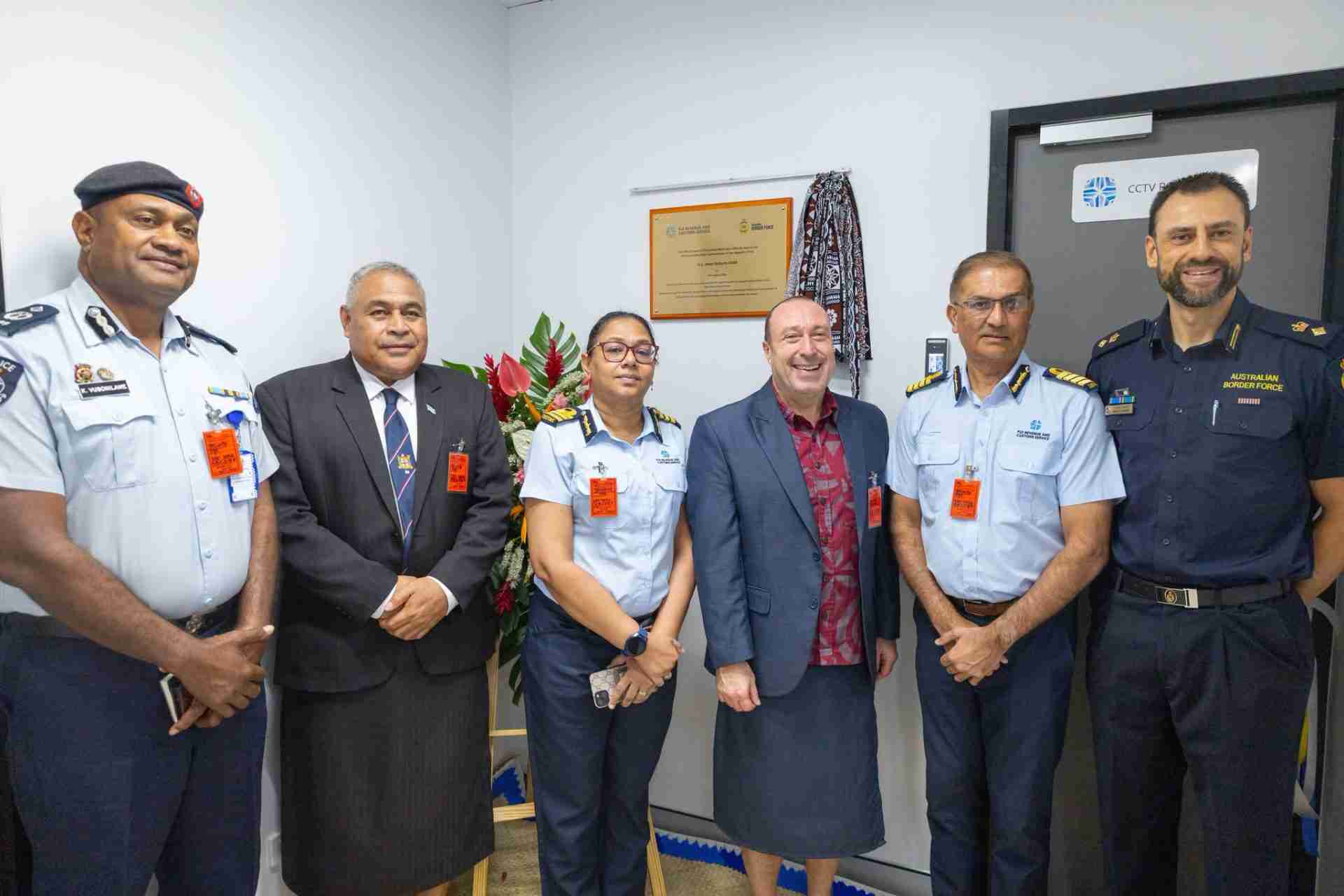
The Fiji Revenue and Customs Service (FRCS) today marked a major milestone in strengthening Fiji’s border security with the official inauguration of the new CCTV Capability and Multi-Purpose Room at Nadi International Airport, delivered through the support of the Government of Australia under the Vuvale Partnership Program.

Funded by the Australian Government through the Australian Border Force (ABF), the state-of-the-art facility is designed to enhance Fiji’s border protection capabilities through real-time surveillance, improved threat detection, and more effective incident response. The new capability will strengthen coordination among border agencies, improve monitoring of airport operations and restricted areas, and support training, operational planning, and intelligence-led border management.

Officially inaugurating the facility, Australian High Commissioner to Fiji, His Excellency Peter Roberts OAM, said the project reflects the strong and enduring partnership between Fiji and Australia. “As Vuvale, Fiji and Australia work together on the issues that matter most to our people. This is another example of our countries working side by side to strengthen border security, build capability and address transnational crime,” said High Commissioner Roberts.

FRCS Chief Executive Officer, Mr. Udit Singh described the facility as a significant investment in Fiji’s national security and border management framework. “The facility inaugurated today represents much more than a modern surveillance and monitoring centre. It embodies our ongoing commitment to innovation, operational excellence, and collaborative border management, while strengthening our collective capacity to safeguard Fiji’s borders and national security,” Mr. Singh said.

Mr. Singh expressed FRCS’s sincere appreciation to the Government of Australia and the Australian Border Force for their continued support through the Vuvale Partnership. “This initiative reflects the depth and strength of our enduring relationship, underpinned by mutual respect, shared strategic interests, and a common commitment to advancing the security, stability, and prosperity of Fiji and our region.”

He also acknowledged the invaluable contributions of FRCS’s border management partners, including the Fiji Immigration Department, Fiji Police Force, Biosecurity Authority of Fiji – BAF, Fiji Airports Limited, the Republic Of Fiji Navy, and other agencies working collectively to protect Fiji’s borders. “As we confront increasingly complex threats, including illicit trafficking, smuggling, and transnational organised crime, our success depends on strong collaboration, effective information sharing, and a coordinated approach to border security,” he said.

The CEO noted that the new capability will significantly enhance situational awareness, strengthen frontline operations, and improve the ability of border agencies to identify, assess, and respond to emerging risks in a timely manner. “The capability we launch today represents a significant step forward in strengthening Fiji’s border security. It will enhance our situational awareness, strengthen frontline operations, and improve our ability to identify, assess, and respond to emerging risks. Just as importantly, it will support better coordination and more timely decision-making across partner agencies.”

As Fiji continues to grow as a regional hub for tourism, aviation, trade, and commerce, Mr. Singh emphasized the importance of remaining intelligence-led, risk-focused, technologically enabled, and united in addressing the evolving challenges facing border agencies.

Australian Border Force Superintendent Uriah Turner reaffirmed the strong partnership between the ABF and FRCS, highlighting their shared commitment to combating border-related threats and enhancing regional security. “The ABF and the Fiji Revenue and Customs Service maintain a close and productive partnership, working together on border security priorities, information sharing, and efforts to detect and disrupt border-related threats. The provision of this equipment and these enhanced capabilities will significantly strengthen our Fiji colleagues’ ability to identify and respond to threats at the border, further supporting regional security and cooperation.”

ABF has continued to support FRCS through specialised equipment, operational tools, technical expertise, and capability-building programmes that have strengthened the effectiveness of frontline officers. Training and professional development opportunities delivered over the years have played a critical role in enhancing border enforcement, intelligence gathering, and risk management capabilities.

The inauguration of the CCTV Capability and Multi-Purpose Room represents another tangible outcome of the Vuvale Partnership and reinforces the shared commitment of Fiji and Australia to safeguarding borders, combating transnational crime, and promoting a secure and prosperous Pacific region.

Strengthening Fiji’s Frontline Defenders at the Port of Suva

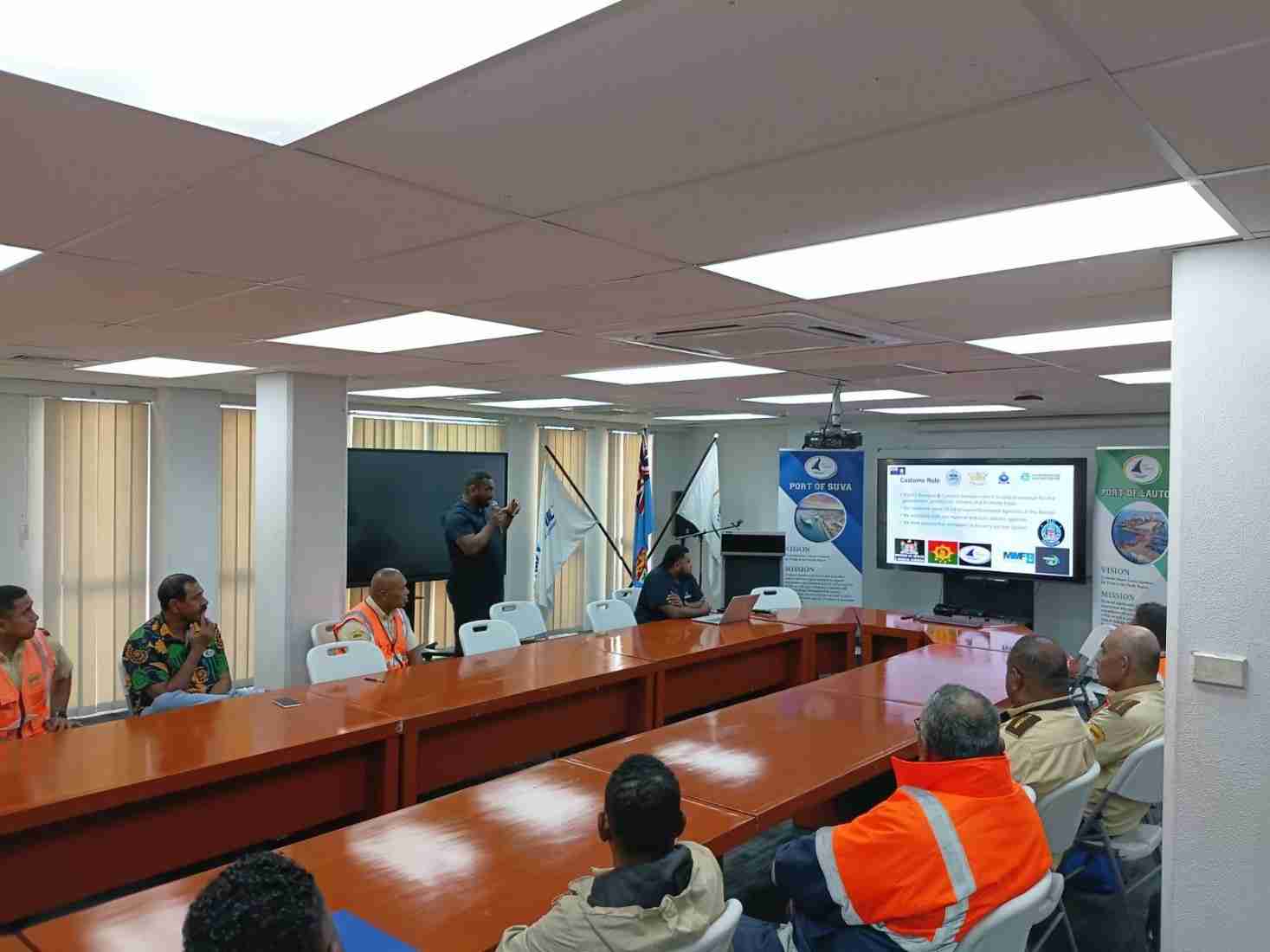
FRCS Maritime and Outer Ports Team recently delivered a border security awareness session for Port of Suva Security Officers and Grid Guards, highlighting the critical role they play in safeguarding Fiji’s gateways.

The interactive session enhanced knowledge and awareness across several key border security areas, including:

  • Insider Threat Detection and Prevention
  • Supply Chain Security Checks
  • Customs Legislative Powers
  •  Customs Control Areas and Access Procedures
  • Types of Container Seals
  •  Container Tampering Indicators
  •  International Ship and Port Facility Security (ISPS) Standards

As the first line of defence at our ports, security personnel are essential in maintaining the integrity of Fiji’s borders, facilitating secure trade, and ensuring the safe movement of people and goods.

Through initiatives like these, FRCS continues to strengthen partnerships, build capacity, and foster greater collaboration with key stakeholders and partner agencies. Together, we are enhancing our collective ability to detect risks, prevent illicit activities, and protect Fiji’s economic and national security interests.

Strong Borders. Trusted Partnerships. Secure Futures.

FRCS remains committed to working hand-in-hand with our partners to safeguard Fiji’s borders through vigilance, professionalism, and a shared commitment to security

FRCS and Australian Border Force Reaffirm Commitment to Stronger Border Security Cooperation

The Fiji Revenue and Customs Service (FRCS) and the Australian Border Force (ABF) have reaffirmed their shared commitment to strengthening border security, customs capability and regional cooperation between Fiji and Australia.

During a recent bilateral meeting, representatives from both agencies reviewed progress under the existing Memorandum of Understanding and discussed ongoing and future areas of cooperation aimed at enhancing Fiji’s border management and operational capability.

Key areas of discussion included the Container Examination Facility project, support for FRCS maritime vessels and associated training, integrity initiatives, the risk assessment of the Nadi Parcel Post, and a range of current and proposed capacity-building programmes.

The meeting also highlighted ABF’s continued technical and operational support to Fiji Customs in areas including maritime enforcement, intelligence development, digital forensic capability, trade-based money laundering, and specialised officer training.

This partnership continues to strengthen the capability and readiness of FRCS officers to identify, assess and respond to emerging border risks, transnational organised crime, and threats within Fiji’s maritime domain.

FRCS and ABF acknowledged the importance of sustained cooperation, information sharing and capability development in protecting national borders, facilitating legitimate trade and travel, and promoting security across the wider Pacific region.

Both agencies remain committed to building on their longstanding partnership and identifying further opportunities for practical cooperation and mutual support.

FRCS Records Highest Annual Revenue Collection to Date

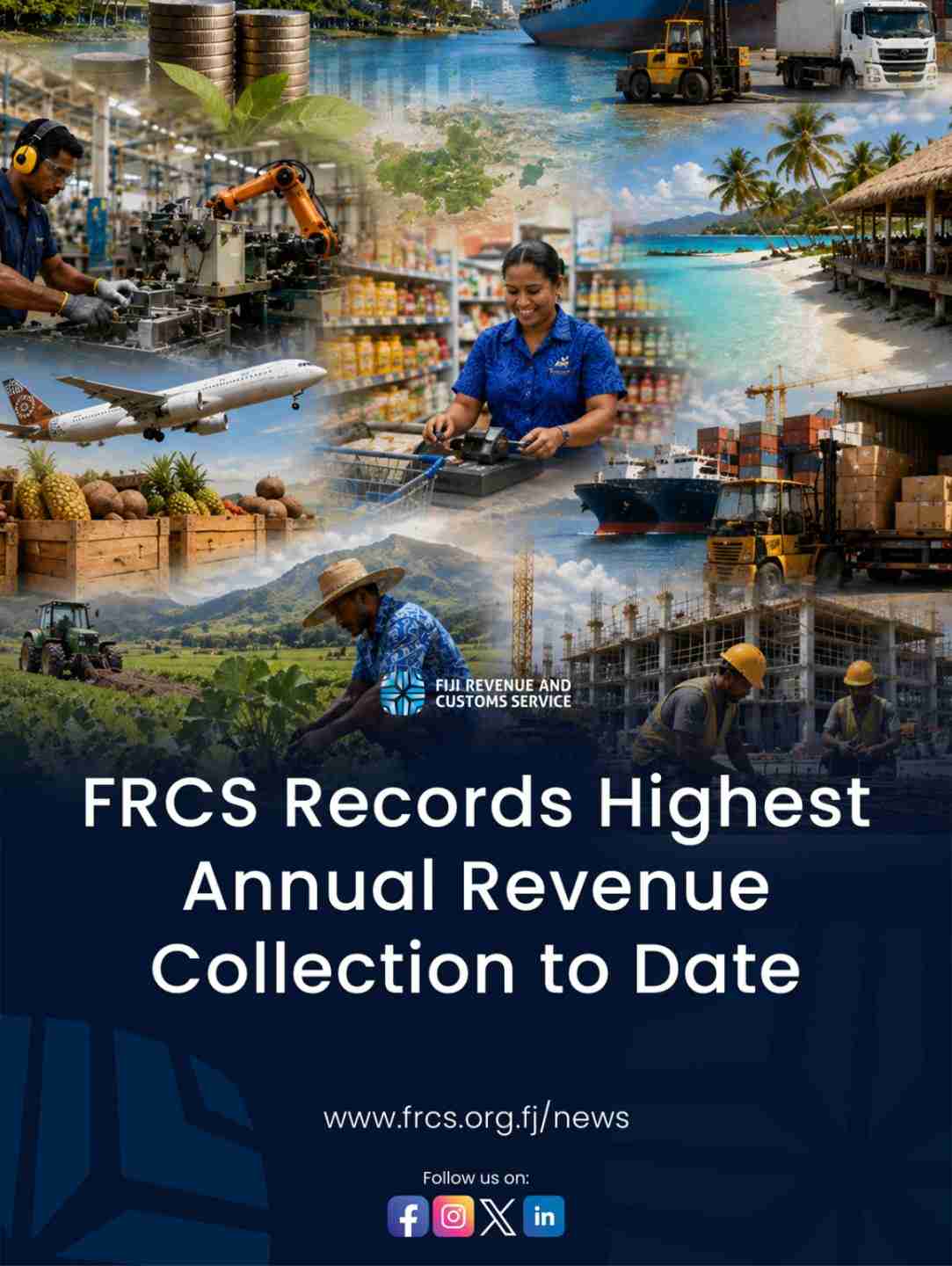
The Fiji Revenue and Customs Service (FRCS) has collected net revenue of $3.510 billion for the financial year ended 31 July 2026—the highest annual revenue collection recorded by the Service.

The result is $136.2 million, or 4.0 per cent, above the Government’s annual forecast of $3.374 billion. It is also $25.8 million, or 0.7 per cent, higher than the $3.485 billion collected in the previous financial year.

FRCS Chief Executive Officer Mr Udit Singh said the result demonstrated the resilience of Fiji’s economy despite geopolitical uncertainty, international fuel-supply pressures, imported inflation and softer expectations for tourism and consumer activity.

“This record result reflects the strength of Fiji’s underlying business and employment base. Businesses continued to operate and contribute, employers-maintained jobs and wages, trade remained active, and taxpayers continued to support the country despite a challenging economic environment,” Mr Singh said.

Growth was led by Net Income Tax, which increased by $53.7 million, Net Customs collections, which increased by $46.6 million, and Departure Tax, which increased by $43.7 million.

Within these categories, PAYE increased by $37.9 million and Company Income Tax rose by $28.3 million. These results point to continued resilience in formal employment, wages, and business profitability. Fiscal Duty, Domestic Excise Duty, Withholding Tax, and Import Excise Duty also recorded positive annual growth.

Net VAT declined by $102.8 million compared with the previous year, principally reflecting the reduction in the VAT rate from 15 per cent to 12.5 per cent, together with refund and payment-timing effects. The decline should therefore not be interpreted as an equivalent reduction in underlying economic activity.

The July collection was $288.8 million, which was $16.6 million below forecast and $22.3 million below July 2025. The softer monthly result was influenced by the timing of Company Income Tax payments and higher refunds. Nevertheless, the strong performance over the preceding eleven months enabled FRCS to finish the year well above its annual forecast.

Mr Singh said the result was broadly consistent with the Reserve Bank of Fiji’s assessment that the economy continues to grow, although at a slower pace and with elevated risks from fuel prices, inflation, and global uncertainty.

“We should view this achievement with confidence but not complacency. The economic risks remain real, but the breadth of the revenue result shows that Fiji enters the new financial year with a resilient economic and fiscal foundation.”

Mr Singh thanked Fiji’s taxpayers, businesses, employers, importers, exporters, customs brokers, and tax agents for their contribution.

“This achievement belongs first and foremost to Fiji’s taxpayers. Every dollar collected supports essential public services, including healthcare, education, infrastructure, social assistance, and border protection.”

“I also thank the FRCS Board for its leadership and governance, our staff for their professionalism and commitment, and the Government, Ministry of Finance, Reserve Bank of Fiji and our partner agencies for their continued cooperation and support.”

KEY HIGHLIGHTS

• Net revenue: $3.510 billion

• Highest annual collection recorded by FRCS

• Above annual forecast: $136.2 million, or 4.0 per cent

• Above the previous financial year: $25.8 million, or 0.7 per cent

• July 2026 net revenue: $288.8 million