Fiji and New Zealand Commence Review of Double Taxation Agreement (DTA)

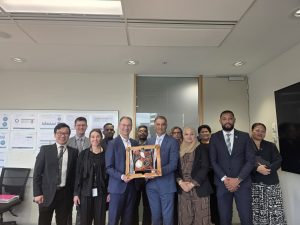
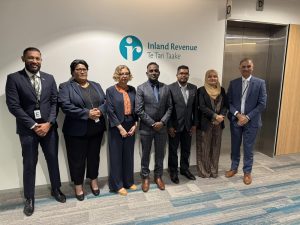
The Fiji Revenue and Customs Service (FRCS) is pleased to announce the commencement of the first round of negotiations with the New Zealand Inland Revenue Department (NZ IRD) to review the Double Taxation Agreement (DTA) between Fiji and New Zealand. The discussions are being held in Wellington from 8–12 December 2025.

The Fiji delegation is led by FRCS Chief Executive Officer, Mr. Udit Singh, accompanied by senior members of FRCS Management.

The negotiation was formally opened by New Zealand’s Commissioner of Inland Revenue, Mr. Peter Mersi, and began with a traditional Māori ceremony underscoring the strong and respectful partnership between the two countries. The New Zealand delegation is led by Ms. Carmel Peters, Strategic Policy Advisor at NZ IRD.

The current DTA was first signed on 27 October 1976 and amended in 1986 and 1994. This comprehensive review, the first since those changes presents a timely opportunity to modernise the agreement in line with current international tax practices and ensure fair and transparent tax outcomes for both jurisdictions.

New Zealand remains one of Fiji’s most important economic partners, with strong cooperation in trade, investment, labour mobility, and tourism. Strengthening tax treaty arrangements plays a vital role in improving investor confidence and supporting sustainable economic growth. This review also reinforces the Fiji–NZ Duavata Partnership, which reflects the shared vision of both nations to deepen collaboration across economic, social, and cultural spheres.

FRCS CEO Mr. Udit Singh said that Fiji values its strong and longstanding partnership with New Zealand, adding that this review reflects the shared commitment of both countries to ensuring a modern and fair tax treaty framework that supports business activity and safeguards the interests of our people. The Duavata Partnership provides an important foundation for these negotiations, highlighting mutual trust and cooperation as we work towards a future-ready agreement.

FRCS looks forward to productive discussions throughout this week and continued collaboration with New Zealand into 2026 as both countries work towards a modernised and mutually beneficial DTA.
 

FRCS Connects Beqa Island to Tax and Compliance Services

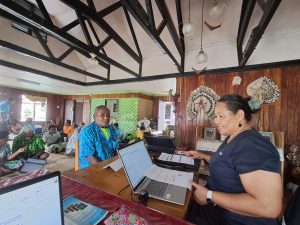
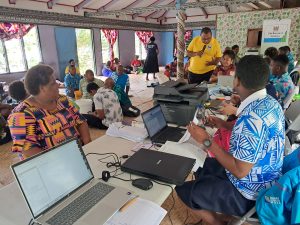
In a significant effort to improve access to essential government services for remote communities, the Civil Registration and Vital Statistics (CRVS) team led a multi-agency outreach program to Beqa Island in Fiji’s Central Division. The initiative brought together key stakeholders, including the Fiji Revenue and Customs Service (FRCS), Births, Deaths & Marriages, Ministry of Health and Medical Services, Ministry of Immigration, Ministry of iTaukei Affairs, and other partners, to deliver a comprehensive range of services directly to residents.

The outreach aimed to bridge service gaps and promoted economic inclusion by making critical services accessible without the need for costly travel to urban centers. FRCS played a central role in this initiative by providing Taxpayer Identification Number (TIN) registrations, supporting the issuance of Joint ID cards, and offering business registration and advisory services. These efforts helped individuals understand their tax obligations, guided entrepreneurs on compliance and record-keeping, and highlighted the benefits of joining the formal economy, such as access to government support and financial services.

Represented by Laisa Draunibaka and Eremasi Lolo, FRCS also collaborated with partner agencies to ensure accurate TIN verification during Joint ID card issuance. In addition, the team conducted interactive awareness sessions on taxation and its role in national development, addressing community questions and fostering trust in government processes. By empowering residents with knowledge and resources, FRCS reinforced its commitment to financial inclusion and sustainable economic growth.

This outreach not only streamlined access to essential services but also strengthened community confidence in government institutions. By bringing tax and compliance services closer to remote communities, FRCS and its partners are helping build a foundation for inclusive development. The initiative underscores the government’s commitment to ensuring that no community is left behind, regardless of geographic challenges.


Fiji Champions Regional Trade Modernization: A Bold Step Toward a Digitally Connected Pacific

In an era where global competitiveness hinges on speed, transparency, and innovation, Fiji is leading the charge to transform trade facilitation across the Pacific. By hosting the World Bank Group’s landmark workshop in Nadi, Fiji reaffirmed its commitment through the Fiji Revenue and Customs Service (FRCS) to spearhead digital solutions that will redefine how Pacific nations engage in international trade.

From November 25–26, 2025, the World Bank Group (WBG) convened a pivotal regional workshop under the theme “Accelerating Trade Facilitation in the Pacific.” This gathering marked a significant milestone in the region’s journey toward modernizing trade processes through the implementation of the National Single Window (NSW) Project, a World Bank–financed initiative designed to streamline trade documentation and clearance across borders.

The workshop convened delegations from six Pacific nations actively engaged in the NSW project: Fiji, Kiribati, Solomon Islands, Tonga, Tuvalu, and Vanuatu. Each country was represented by senior officials from Customs Administrations, Biosecurity agencies, and Trade departments, ensuring a holistic approach to trade facilitation. This diverse participation highlighted the critical role of cross-sectoral collaboration in building a unified digital trade ecosystem for the Pacific.

At the heart of the discussions was the National Single Window (NSW) Project, a transformative, World Bank, financed initiative aimed at streamlining trade documentation and clearance procedures. By digitizing border processes, the NSW will enable faster, more transparent, and cost-effective trade, positioning Pacific economies for greater competitiveness in global markets.

Key Themes and Strategic Priorities

Over two intensive days, participants explored the foundational pillars for successful NSW implementation, including:

  • Shared Vision and Strategic Direction – Establishing a regional roadmap to enhance efficiency, transparency, and competitiveness.
  • Governance Framework – Defining institutional roles and oversight mechanisms for accountability and sustainability.
  • Financial Model – Developing cost-sharing strategies and ensuring long-term viability.
  • Operational Design – Crafting workflows and technical integration for seamless trade processes.
  • Legal Harmonization – Aligning national legislation to provide a robust legal foundation for NSW operations.

These discussions reinforced the complexity and significance of digitizing border procedures which is a  bold step toward modernizing trade in the Pacific.

Outcomes and Regional Impact

The workshop delivered tangible outcomes:

  • Regional Alignment on NSW vision and governance.
  • Knowledge Sharing among countries, fostering mutual learning and best practices.
  • Foundation for Harmonization of systems and processes to reduce costs, improve transparency, and accelerate trade.

For small island economies, trade facilitation is more than a technical upgrade. It is a strategic imperative for economic growth, resilience, and global integration. By embracing the NSW framework, Pacific nations are unlocking new opportunities for investment, strengthening compliance with international standards, and advancing sustainable development.

Fiji and FRCS at the Forefront

Hosting this workshop in Fiji reflects the country’s pivotal role in shaping the future of Pacific trade. FRCS’s leadership and commitment to modernization signal a strong national and regional resolve to build a more connected, efficient, and competitive trade environment.

The World Bank Group’s initiative was not merely a technical consultation, but it was a regional pledge to cooperation and progress. As Fiji and its Pacific partners move forward with NSW implementation, the partnerships and insights forged in Nadi will serve as a cornerstone for a digitally empowered Pacific economy.

FRCS Strengthens Stakeholder Engagement with Gold Card Awareness Session in Nadi

FRCS recently hosted an interactive awareness session for our esteemed Gold Card members in Nadi.
 
The session provided valuable insights into key developments, including the 2025/2026 Budget Policy and the VAT Monitoring System (VMS), initiatives designed to strengthen compliance and enhance service delivery.
 
This engagement reflects our unwavering commitment to fostering transparency, building trust, and working collaboratively with stakeholders. By creating these platforms for dialogue, we aim to deliver exceptional service and drive positive outcomes for businesses and the wider community.
 
Together, we continue to shape a stronger partnership that supports growth and sustainability across Fiji.