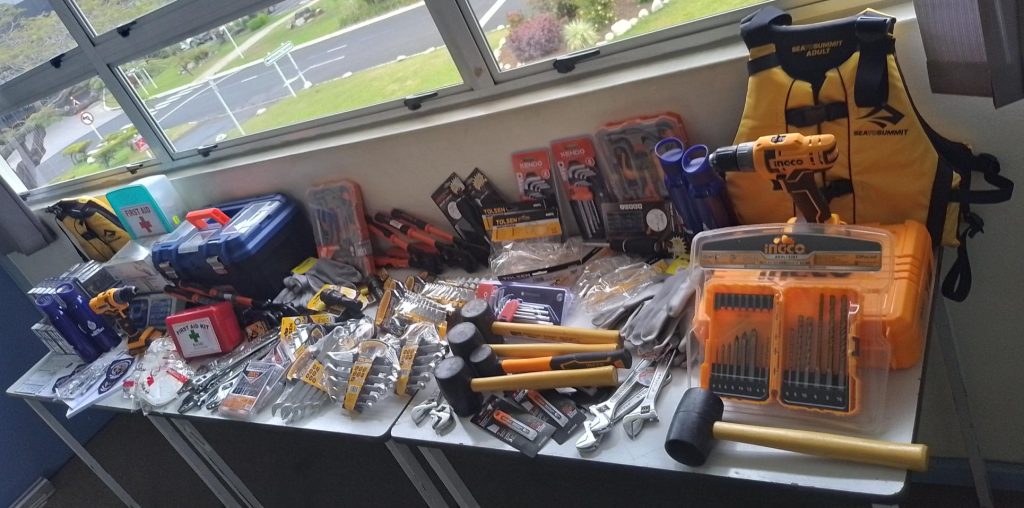
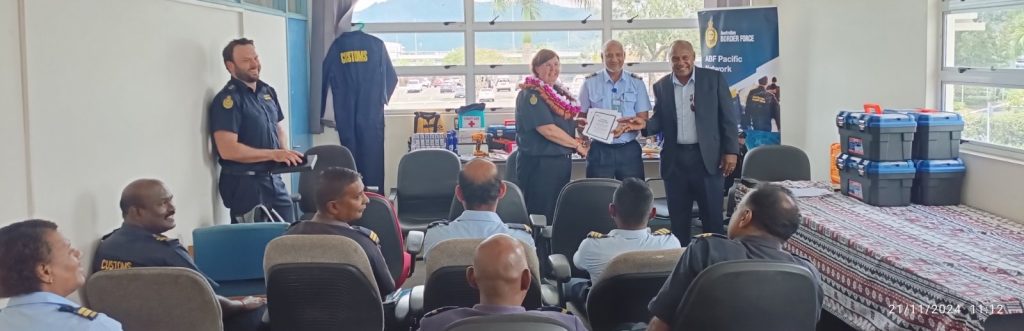
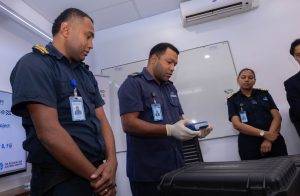
The Australian Border Force (ABF) donated a wide range of equipment including the Narcotic Identification Kits (NIK) to be used at Fiji’s border across aviation, marina, ports, air cargo and mail to enhance detection of illicit substances. The equipment was officially handed over by the ABF Commander International, Ms. Claire Rees to our operations and inspection team at the FRCS office at Nadi Airport. The donated equipment will significantly enhance FRCS’s capability to test and detect illicit substances at the borders or during operational exercises. The Narcotic Identification Kits will allow us to test for illicit substances in real time while the other basic tools and equipment can be used to inspect goods at Fiji’s borders. FRCS greatly appreciates the outstanding support and commitment provided by ABF in further enhancing Fiji’s border management and security. FRCS and ABF have a long-standing relationship, and we value the strong partnership that we have established with ABF and thank the Australian Government and ABF for the support towards FRCS in the form of customs modernisation, technical assistance and capacity building that has helped FRCS improve its core roles including border protection, security, trade facilitation, revenue and compliance.
WCO/JICA Trains Customs Officers to Become Master Trainers for Customs Administrations in the Pacific Islands
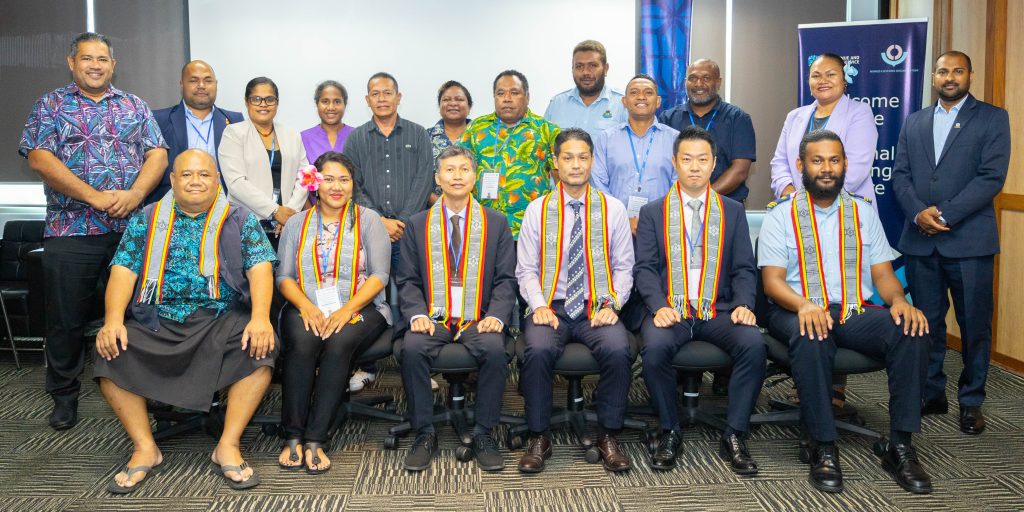
The World Customs Organisation (WCO) in cooperation with the Japan International Cooperation Agency (JICA) has organised the first Working Group Activity (WG1) of the Master Trainer Programme (MTP) on Risk Management (RM) and Post Clearance Audit (PCA) which is being held at the Fiji Revenue and Customs Service (FRCS) Headquarters in Suva. MTP is the flagship program of the WCO/JICA Joint Project and is aimed at working with customs administrations to build more sustainable training capacity on key customs topicsthrough the development of a pool of highly experienced trainers, tailor-made training materials and training programme/course curricula.
30 customs officers from Fiji, Palau, Papua New Guinea (PNG), Samoa, Solomon Islands, Timor Leste, Tonga and Vanuatu are attending the MTP Working Group Activity 1. Expressing gratitude for the assistance from WCO and JICA in enhancing capacity development of customs administrations in the Pacific, FRCS CEO, Mr. Udit Singh stated that the MTP is important for Fiji as well as other Pacific Island countries as it will help develop the skills and capacity of customs professionals which can help to enhance revenue collection, support economic development, build regional cooperation and improve border security.
FRCS Director Border and Customs, Ms. Shelini Kumar stated that MTP is not just another training initiative as it represents a critical step forward in enhancing our expertise and broadening our capacity to manage the increasing complexities of customs and border management. “Our collective goal is to build a resilient customs service that can meet the demands of a rapidly changing global landscape,” Ms. Kumar said. JICA has been implementing MTP with WCO since 2016. In the Pacific, the first MTP which was on the Customs Valuation and the Harmonised System (HS) classification was implemented from 2021 to June 2024 targeting 6 countries and resulting in 21 Master Trainers.
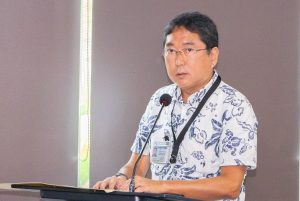
JICA Fiji Office Resident Representative, Satoshi Wakasugi is confident that the JICA/WCO Joint Project will contribute to enhance trade facilitation and revenue collection for targeted countries in the Pacific Islands. “This MTP is in line with the strengthen capacity building for financial management, that is the partnership strategy among the governments of Pacific Islands and Japan and was mentioned in the Joint Action Plan of the 10th Pacific Islands Leaders meeting (PALM 10) in Tokyo which was adopted in July 2024.
According to the Deputy Manager WCO/JICA Joint Project, Mr. Masaya Deguchi, MTP was not limited to the Pacific. “We have had similar programs in Africa and are conducting one in Central Asia and Caucasus. Through these programs, we have produced over 210 Master Trainers and they have gone ahead and conducted trainings for a staggering 49,000 individuals from government officials to private sector professionals between 2018 to 2023 in Africa, ”Mr. Deguchi said.
“As we embark on this journey together, I am confident that the knowledge and skills you gain will not only benefit your respective countries but also strengthen our collective efforts in the region,” he said.
FRCS Receives Detection Devices to Enhance Border Security
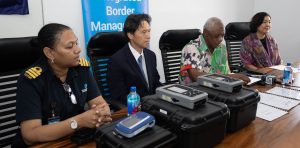
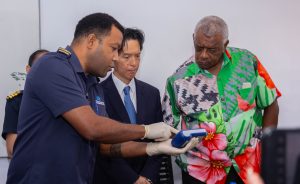
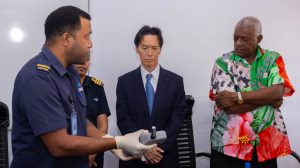
In partnership with the Japanese Government, the United Nations Development Programme – UNDP (UNDP Pacific Office in Fiji) handed over the First Defender and TruNarc devices to further enhance and strengthen Fiji’s border security capabilities. The Japanese Ambassador to Fiji, Mr. Rokuichiro Michii handed over the equipment to the Minister for Home Affairs and Immigration in Fiji, Hon. Pio Tikoduadua at the Suva Wharf. The equipment will be officially used by FRCS to test and detect illicit substances at the border or during operational exercises.
The First Defender and TruNarc are high-end, handheld equipment that border officials will use to scan and test for drugs, harmful chemicals, and substances alike. It provides border officials with an on-the-spot assessment of the classification of the drugs without having to wait for days or weeks to receive official test results. Expressing gratitude on the receipt of the detection devices, FRCS Director Border and Customs, Ms. Shelini Kumar stated that the new equipment will further enhance the battle against the proliferation of illicit and dangerous drugs in Fiji as the devices can analyse and identify a multitude of drugs and other substances in the field with high speed, accuracy and precision.
According to Hon. Tikoduadua, Fiji’s commitment to strengthening border security aligns with the broader aims of Fiji’s National Countering Illicit Narcotics Strategy 2023 to 2026. He said that this strategic framework underscored the importance of adopting advanced technologies and building capacity within our agencies to respond effectively to today’s security challenges.
FRCS appreciates the continued support and partnership from UNDP and the Government of Japan in assisting Fiji to achieve their specific targets under the national security priorities.
FRCS Educates Tertiary Students on Tax and Customs
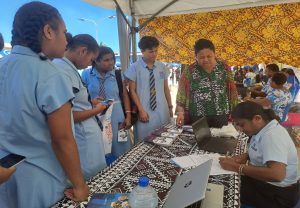
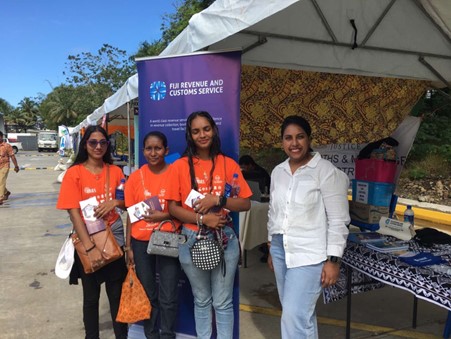
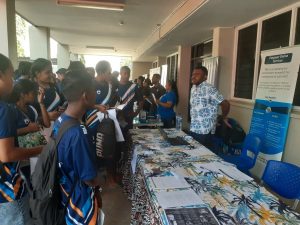
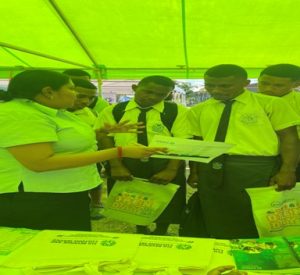
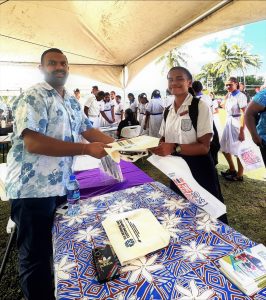
With the view that tax and customs literacy for youths is an investment in the future, our Education team have been visiting tertiary institutions and conducting education and awareness programs on these. Recently, the team visited the Navuso Agriculture Technical Institute in Naitasiri and the Fiji National University (FNU) Campus in Nasinu, Nadi and Natabua in Lautoka. The students learnt about the vital role of FRCS, importance of taxation and customs in accelerating the economic development, protecting our borders and its benefits to all Fijians. They also acquired knowledge on tax laws and regulations, taxpayer obligations and the importance of compliance, tax systems and income tax deductions.
They found the education program beneficial in enhancing their knowledge of financial planning as many of them wish to engage in commercial farming or operating small business. The sessions were very interactive with students asking several questions and seeking assistance on various tax and customs related issues. FRCS has been increasingly enhancing tax and customs education and awareness for students and youths to lay groundwork for informed and compliant citizens. This is a free service provided by FRCS and people interested in our education and awareness programs can contact us on 3243000 or 1326 or email on info@frcs.org.fj.
FRCS has been enhancing tax and customs education and awareness programs to people living in the remote and highland areas, reaching out to the people who may find it difficult to access our services due to their location. Recently, our team conducted business and tax compliance training to 18 people from the Tikina of Nacula which consists of four villages including Nacula, Naisisili, Navotua and Malakati. Nacula is a hilly and volcanic island of the Yasawa Group in Fiji’s Ba Province. It is the third largest and is the second-farthest north in the group of islands.
The topics covered during the training included requirements for Taxpayer Identification Number (TIN), registration of Income Tax and Value Added Tax (VAT), declaration of income, lodgement and payment of taxes, penalties, tax compliance and record keeping. The 18 trainees were grateful for the training and asked several questions on tax registration and lodgement of tax returns which were answered by our team. FRCS plans to conduct further training, education and awareness on tax and customs in remote and highland areas in the coming months.
FRCS Holds Meeting with New and Existing (POS/SDC) Vendors
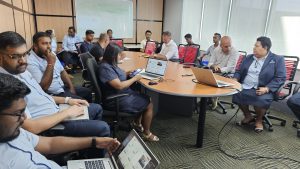
FRCS held a meeting with the new and existing point of sale (POS)/Sales Data Controller (SDC) vendors to update them of the transition of Electronic Fiscal Device (EFD) (VAT Monitoring System) from version 2 to version 3 and the requirements to comply with the version 3. We will be rolling out EFD version 3 by the end of December 2024. All accredited EFD vendors will be required to re-accredit and comply with the requirements for EFD version 3 by the end of June 2025. These vendors are also required to register on sandbox environment by the end of January 2025. Sandbox accreditation environment will allow the vendors a testing environment for EFD version 3. Should the vendors fail to register for the sandbox by the end of January 2025 or re-accredit by the deadline provided, then FRCS will remove them from this list of accredited vendors.
As announced in the 2024/2025 National Budget, effective from 1st August 2024, the VAT Monitoring System has been re-activated. FRCS is committed to work collaboratively with businesses and vendors to achieve successful implementation. For assistance, please email our team on efdenquiry@frcs.org.fj.
Our Ba team conducted a two-week outreach program in Nadarivatu in partnership with the Ba and Nadarivatu District Administration Offices. During this period, our team visited Nadarivatu High School, and the villages located remotely and in the highlands. The team served and assisted hundreds of people in the area with registration of Taxpayer Identification Number (TIN), Joint ID Card and other tax and customs services requested by the people to enhance economic activity in Nadarivatu as the area has potential for logging business.
This was an excellent opportunity for FRCS to take our services to the people living in remote and highland areas and have difficulty in accessing our services. One of our strategic objectives is to become a customer centric organization. Our team will be conducting more awareness and outreach programs in the coming months in collaboration with other government agencies.
FRCS held a forum for the Customs Brokers and the authorised clerks to keep them abreast of the latest developments to the Customs licensing process and other pertinent Customs issues. Customs Brokers are one of the key partners of FRCS and play a vital role in ensuring that import-export operations are managed effectively and in compliance with the laws.
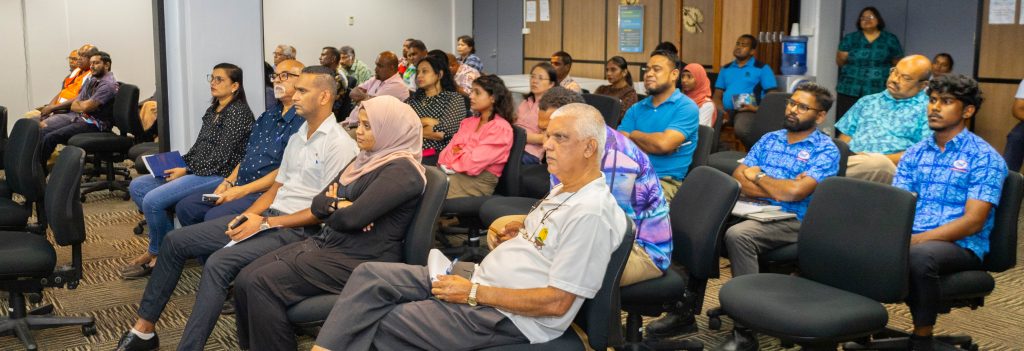
The forum focused on several important topics including tariff opinion, advance ruling, code of conduct, changes in the Customs licensing process, findings from the recent time release study, continuous professional development program (CPD) and demerit points. FRCS has implemented a continuous professional development program for the Customs Brokers which is currently provisional but from 1st January 2025 it will be in force for 3 years. CPD will be one of the mandatory criteria for renewal of their license.
It was an interactive forum where the participants were provided with the opportunity to ask questions, provide feedback and share ideas. FRCS deeply values its partnership with the Customs Brokers and is committed to listening and learning from their insights, just as much as the Service is committed to sharing updates and strategies with them.


 In partnership with the Japanese Government, the



 FRCS held a meeting with the new and existing point of sale (POS)/Sales Data Controller (SDC) vendors to update them of the transition of Electronic Fiscal Device (EFD) (VAT Monitoring System) from version 2 to version 3 and the requirements to comply with the version 3. We will be rolling out EFD version 3 by the end of December 2024. All accredited EFD vendors will be required to re-accredit and comply with the requirements for EFD version 3 by the end of June 2025. These vendors are also required to register on sandbox environment by the end of January 2025. Sandbox accreditation environment will allow the vendors a testing environment for EFD version 3. Should the vendors fail to register for the sandbox by the end of January 2025 or re-accredit by the deadline provided, then FRCS will remove them from this list of accredited vendors.
 Our Ba team conducted a two-week outreach program in Nadarivatu in partnership with the Ba and Nadarivatu District Administration Offices. During this period, our team visited Nadarivatu High School, and the villages located remotely and in the highlands. The team served and assisted hundreds of people in the area with registration of Taxpayer Identification Number (TIN), Joint ID Card and other tax and customs services requested by the people to enhance economic activity in Nadarivatu as the area has potential for logging business.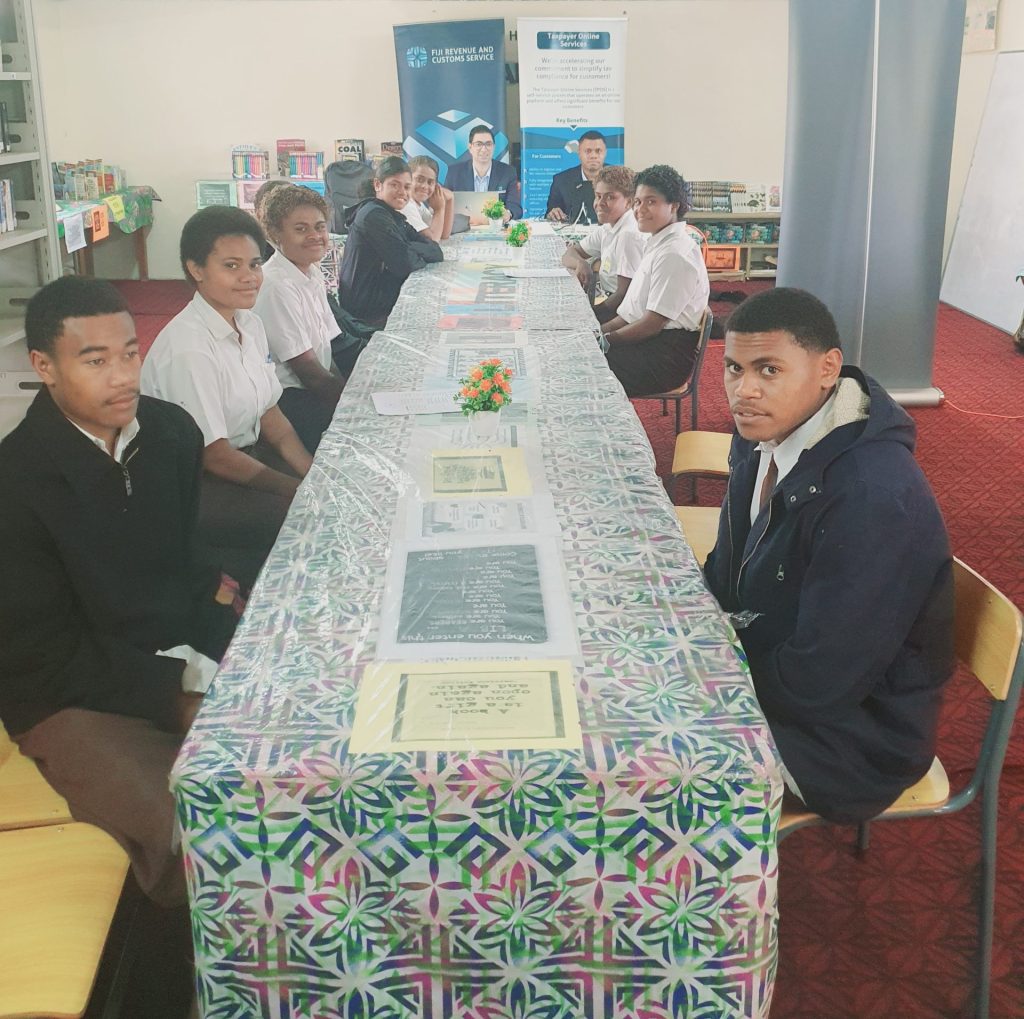
 FRCS held a forum for the Customs Brokers and the authorised clerks to keep them abreast of the latest developments to the Customs licensing process and other pertinent Customs issues. Customs Brokers are one of the key partners of FRCS and play a vital role in ensuring that import-export operations are managed effectively and in compliance with the laws.