

The Wholesale & Retail Industry is a cornerstone of Fiji’s economy, driving employment, trade, and consumer activity supported by Fiji’s strong retail sector growth within the services economy. However, despite its economic significance, the industry presents complex and growing compliance challenges. These include widespread under-registration, volatile VAT turnover patterns, and informal financial practices particularly prevalent among Micro, Small and Medium enterprises (MSMEs). Many businesses continue to operate outside the formal tax system, eroding tax integrity and creating an uneven playing field.
It is also one of the most fragmented sectors – ranging from large importers and specialized Wholesalers & Distributors to informal market vendors and small shop operators – creating diverse compliance risks across its value chain.
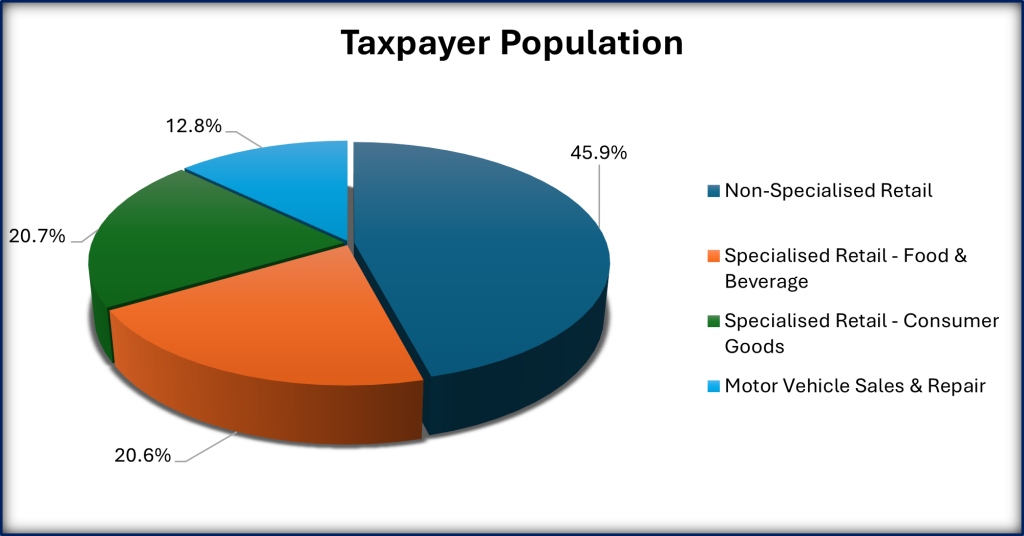
Non-specialized retail encompasses general sales across various outlets, including food and non-food items, second-hand goods, and market stalls. Specialized retail is segmented, with one part dedicated to food, non-alcoholic and alcoholic beverages, tobacco, and motor fuel, while another focuses on consumer goods like clothing, textiles, footwear, household items, pharmaceuticals, and recreational goods. The motor vehicle sector handles the sale of vehicles, parts, and their maintenance. Wholesale operations are categorized into food and agricultural products, and a broader array of consumer and industrial goods such as construction materials, electronics, and chemicals. Finally, the ICT sector is specialized in the retail and wholesale of computers, software, and telecommunications equipment.
Wholesale & Retail Trend Analysis
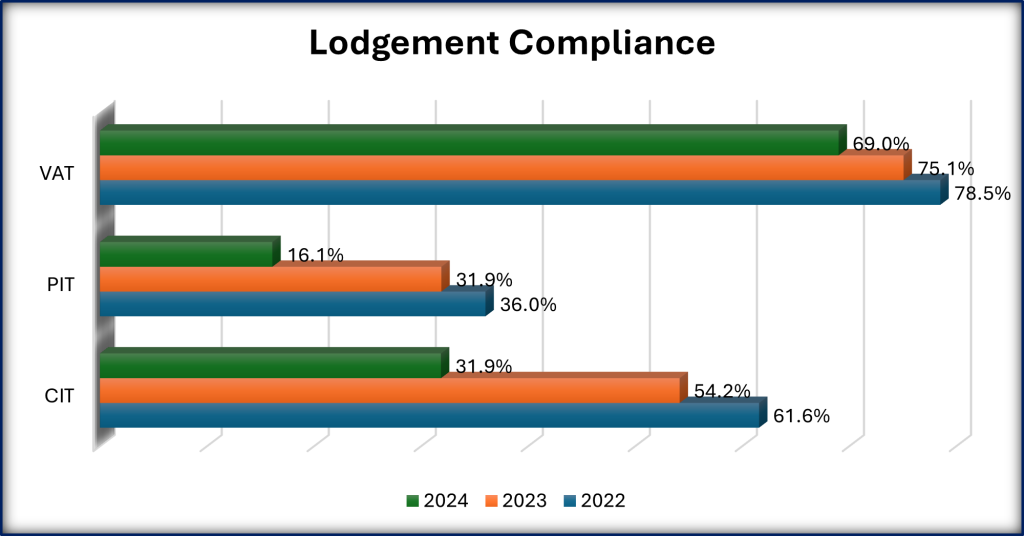
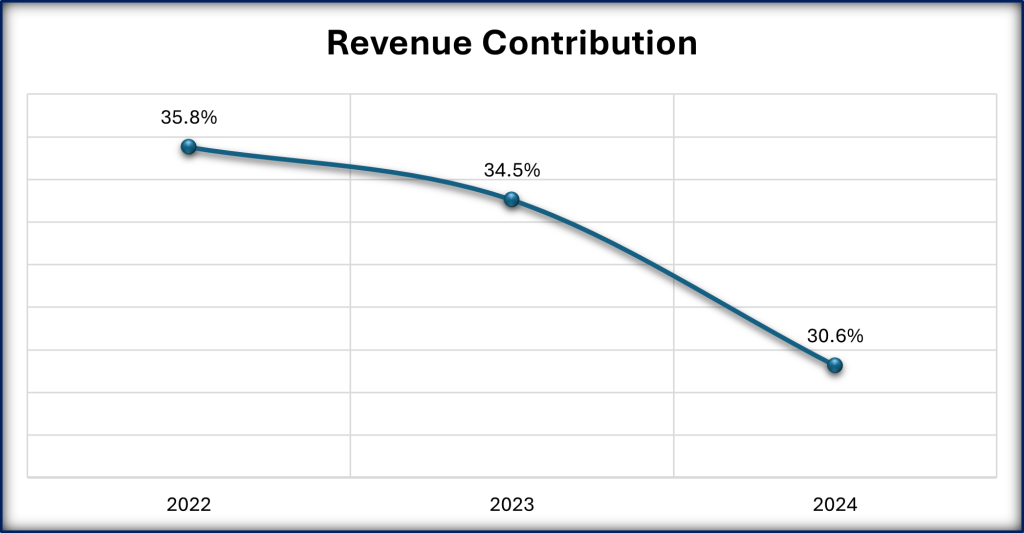
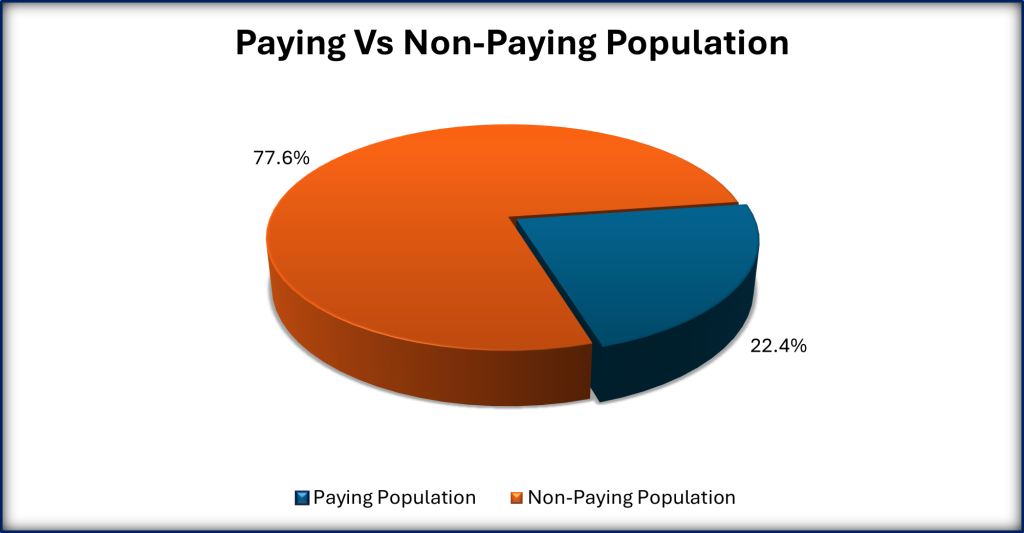
The industry’s revenue contribution has steadily declined from 35.8% in 2022 to 30.65% in 2024, a trend likely exacerbated by significant compliance challenges. Over 60% of businesses within this sector are Micro and Small Enterprises (MSEs), and recent analysis reveals considerable variation and a downward trend in lodgement compliance rates for VAT, Personal Income Tax, and Corporate Income Tax, particularly for VAT, which points to a growing risk of revenue leakage. Only 22% of the total taxpayer population is actively contributing.
Risk Areas and Mitigation Strategies
Identifying hidden gaps in the retail chain – from closing stock misreporting to distributor under-declaration, we’re targeting non-compliance to ensure a fair and transparent marketplace.
| Risk Area | Description | Mitigation Strategy |
|---|---|---|
| Inaccurate Sales Declarations | Manipulation and underreporting of taxable sales. | Conduct targeted audits using Risk Engine analysis and third-party data; enforce VMS adoption for real-time VAT monitoring. |
| Double Record Keeping & Expense Overstatements | Issuing duplicate invoices or inflating expenses to reduce taxable income. | Targeted audits and penalties; strengthen cross-checking with suppliers and buyers and apply Risk Differential Framework to identify anomalies |
| Failure to Issue Receipts | Retailers avoid proper documentation, leading to unreported sales and VAT evasion. | Mandate electronic fiscal devices (VMS); public education on consumer rights to demand receipts; conduct spot checks and undercover audits. |
| Closing Stock & Inventory | Taxpayers may manipulate closing stock values to reduce profits or fail to maintain accurate inventory records. | Conduct site inspection and inventory audits, compare sales vs. purchases and require stock declaration during audits. |
| Taxpayers Not Yet Registered for VMS | Businesses failing to comply with VMS registration and reporting requirements. | Accelerate VMS onboarding; and targeted compliance campaigns. |
| High-Risk Taxpayer Segments | 13.04% of taxpayers in the sector were flagged as high risk by Risk Engine. | Use Risk Engine profiles and Risk Differential Framework for targeted audits and compliance education; structured relief programs for voluntary compliance improvement. |
| Unregistered Online Retailers | Businesses operating without tax registration, avoiding tax obligations. | Strengthen cross-agency collaboration with business licensing bodies and payment platforms; targeted registration drives; and public awareness campaigns. |
| Distributors/Middleman | Distributors/Middleman may underreport sales and engage in informal or related party transactions to reduce tax obligation. | Strengthen audit of distribution chains, conduct third-party checks, and cross-check import and sales data. Also, monitor concession use through targeted profiling. |
Last Updated - July 10, 2025