
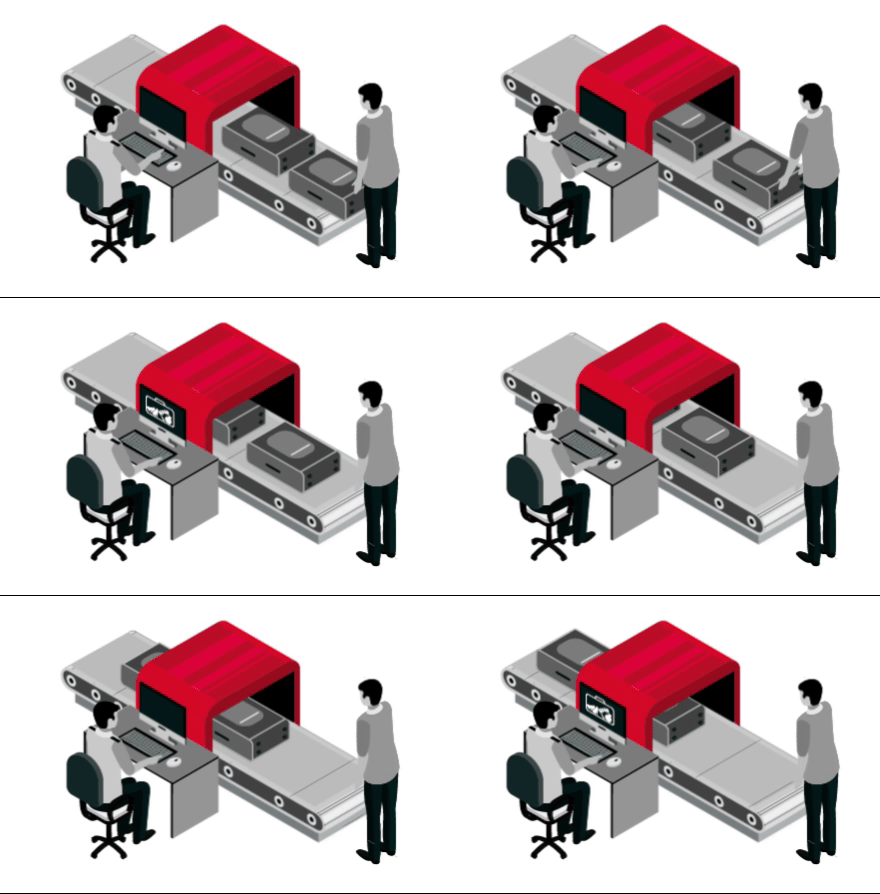
Fiji’s strategic location in the Pacific makes it a vital gateway for both trade and travel — but also exposes the country to evolving border security risks. With Fiji becoming an increasingly active transit hub, the threat landscape is growing more complex, including illicit drug trafficking, money laundering, trafficking of small arms and explosives, and trade-based crime. The Fiji Revenue & Customs Service (FRCS), in close collaboration with national and international partners, is committed to strengthening Fiji’s border security while ensuring the smooth flow of legitimate goods and passengers. Our modern border strategy balances facilitation and protection — leveraging technology, intelligence sharing, and cross-agency collaboration.
FRCS is advancing border security through several key initiatives:
- Advanced Technology & Equipment – Deployment of Non-Intrusive Inspection (NII) equipment, Ion Scanners, and First Defenders at key Ports of Entry to detect illicit substances, explosives, and other prohibited goods.
- Integrated Intelligence & Risk Assessment – All vessels and cargo entering Fiji undergo risk assessment and targeting using the Cargo Targeting System (CTS) and intelligence networks, with priority interventions on high-risk shipments.
- Inter-Agency Collaboration – Strengthened partnerships with the Fiji Police Force, Fiji Military Forces, Fiji Financial Intelligence Unit (FFIU), Immigration, Biosecurity, and other stakeholders to improve joint enforcement, intelligence sharing, and operational coordination.
- Regional & International Cooperation – Enhanced information exchange and joint operations with international partners to counter cross-border trafficking and support Fiji’s role in the global fight against transnational crime.
- Counter-Terrorism Preparedness – Integration of FRCS capabilities within the National Counter-Terrorism Strategy, supporting efforts to detect weapons of mass destruction, dual-use goods, and terrorist financing activities.
Border Trend Analysis
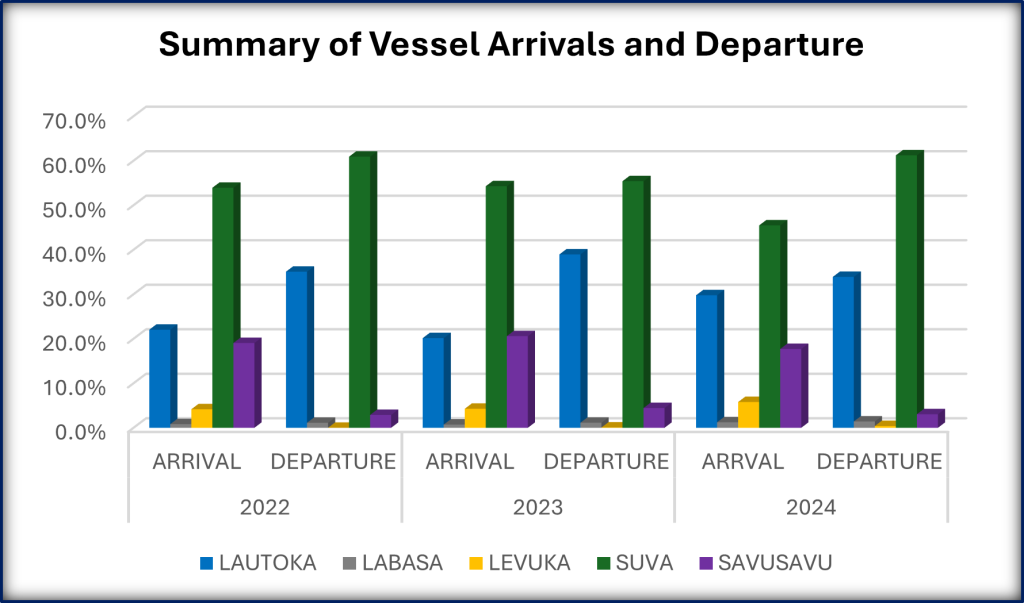
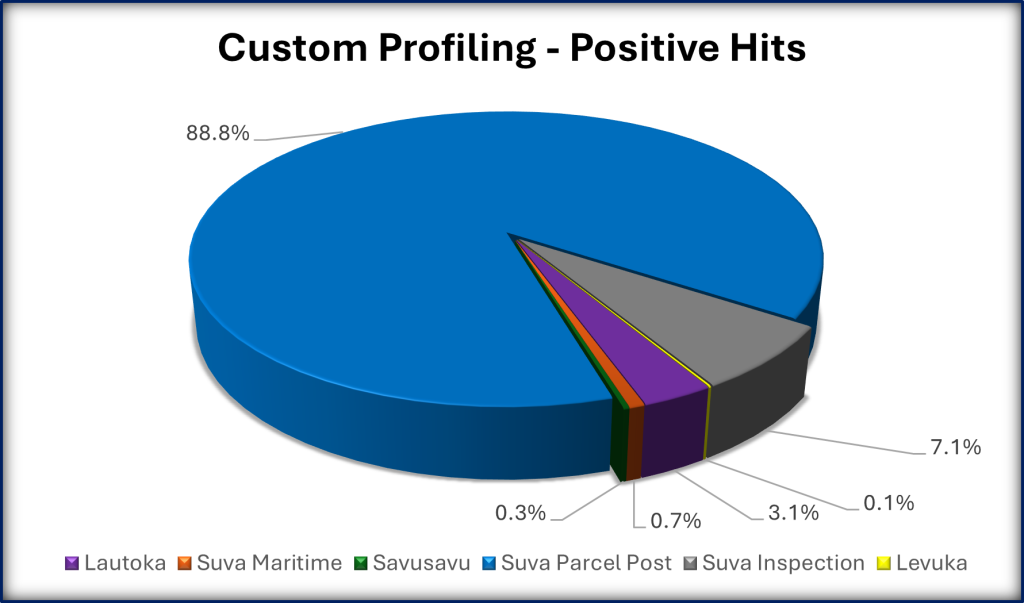
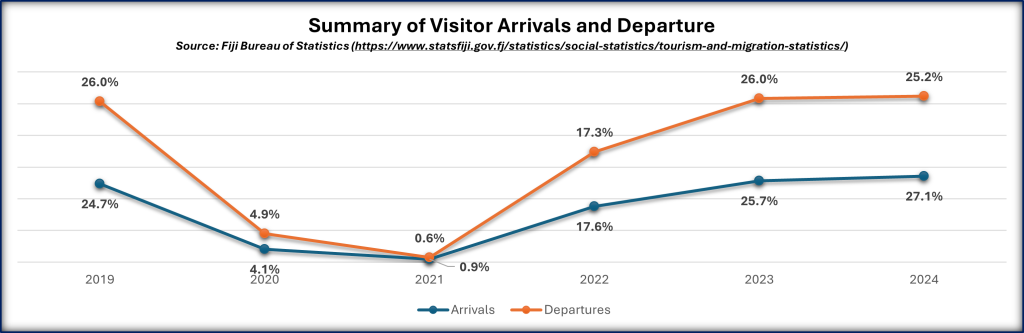
The graphs indicate that Suva remains Fiji busiest port, managing 55% of vessel departure and 36% of arrival, highlighting its strategic importance. The Suva Parcel Post unit has the highest customs profiling with an 88.8% hit rate, while Levuka records the lowest. Visitor movement data from Fiji Bureau of Statistics shows steady post-Covid recovery.
Risk Areas and Mitigation Strategies
Securing our borders with intelligence, technology, and teamwork – guarding against threats while facilitating legitimate movements.
| Risk Area | Description | FRCS Mitigation Strategy |
|---|---|---|
| Drug Trafficking & Precursors | Growing threat of illicit drugs and precursors entering Fiji via air and sea borders. | Deploy NII equipment; collaborate with Police, FFIU, and international agencies for joint intelligence and operational targeting. |
| Money Laundering & Trade-Based Crime | Use of trade transactions to launder illicit funds, often linked to transfer pricing abuse. | Strengthen data matching with FFIU and AML networks; enhance profiling of suspicious trade patterns. Also, the matter will be referred to the Fiji Police Force to further investigate under Proceeds of Crimes Act (POCA) |
| Trafficking of Small Arms & Explosives | Movement of illegal weapons and materials through Fiji’s ports. | Integrate FRCS efforts into National Counter-Terrorism Strategy; enhance intelligence sharing with Police and Defence agencies. |
| Misuse of Dual-Use Goods | Illegal diversion of goods that can be used for both legitimate and illicit purposes. | Implement controls aligned with global best practices; risk assessment of cargo and exporters. |
| Non-Compliance by Vessels | Failure to submit required prior notice or incomplete manifest information. | Enforce 72-hour prior notice for cargo vessels and 9-hour notice for cruise liners; apply penalties for non-compliance. |
| Non-Compliant Customs Agents & Brokers | Facilitation of fraudulent declarations by non-compliant agents. | Apply Customs Agent Demerit Point System; strengthen agent profiling and audit mechanisms. |
| Bonded Warehouse & Transit Risks | Leakage of goods from bonded warehouses or misuse of transit procedures. | Conduct targeted spot checks and audits; monitor high-risk warehouses and enforce timely clearance. |
Last Updated - April 27, 2026