

Non-Profit Organisations (NPOs) play an important role in Fiji’s society – supporting education, religion, sports, welfare, and community causes. Fiji’s tax laws grant tax exemptions for certain NPO income, allowing them to maximise their social impact.
However, tax exemptions do not apply to business income or property income earned by NPOs.
Recent changes to the Income Tax Act 2015 clarify that:
- Income (other than business income) derived by a non-profit organization (NPO) is an exempt income.
- Property income earned by NPOs will be taxable.
This ensures fairness, as NPOs engaged in commercial activity should pay their fair share of tax — just like other businesses. However, many NPOs remain unaware of these rules or continue to incorrectly claim full exemption.
Current Compliance Gaps:
- Many NPOs earning business or property income are not filing Corporate Income Tax (CIT) returns.
- Some NPOs are under-reporting or misclassifying income.
- NPOs filing VAT indicates significant business activity
Non-Profit Organisation’s Trend Analysis
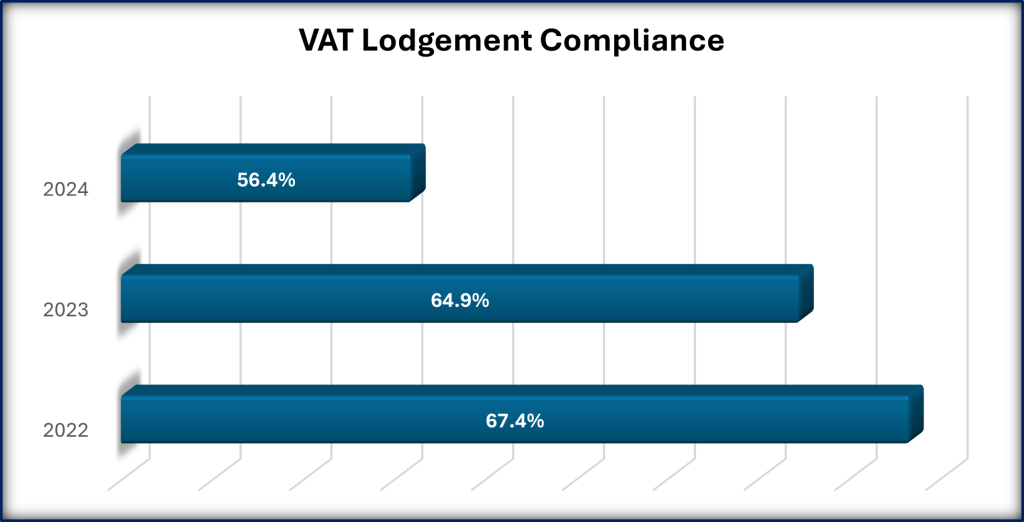
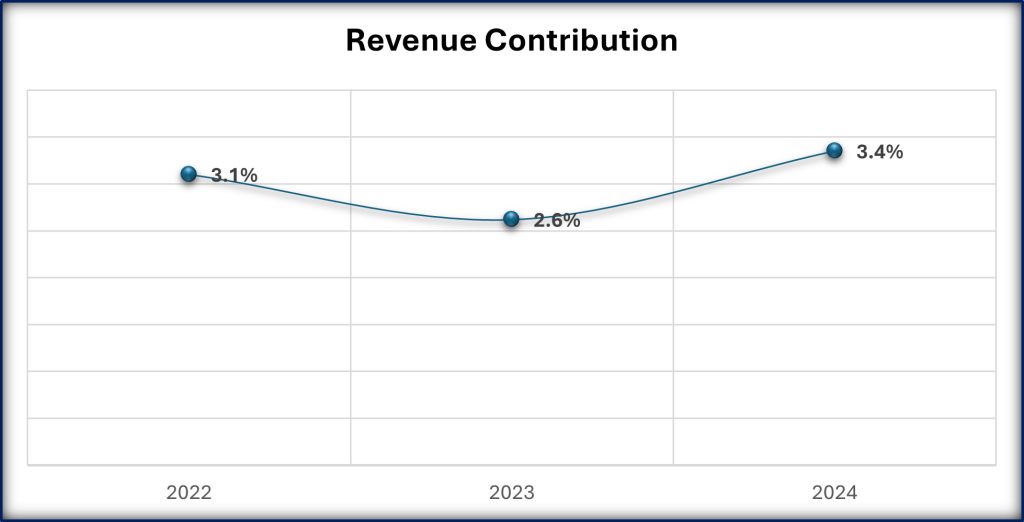
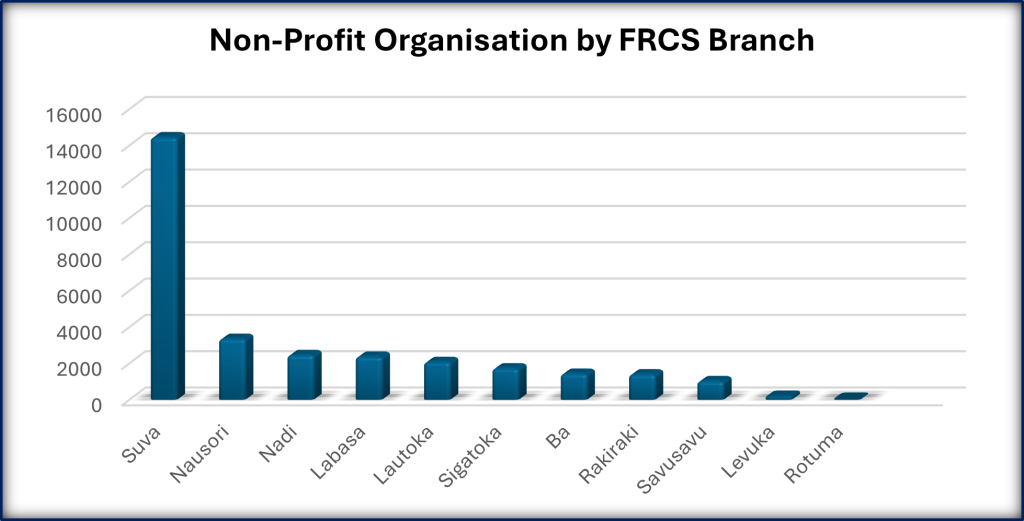
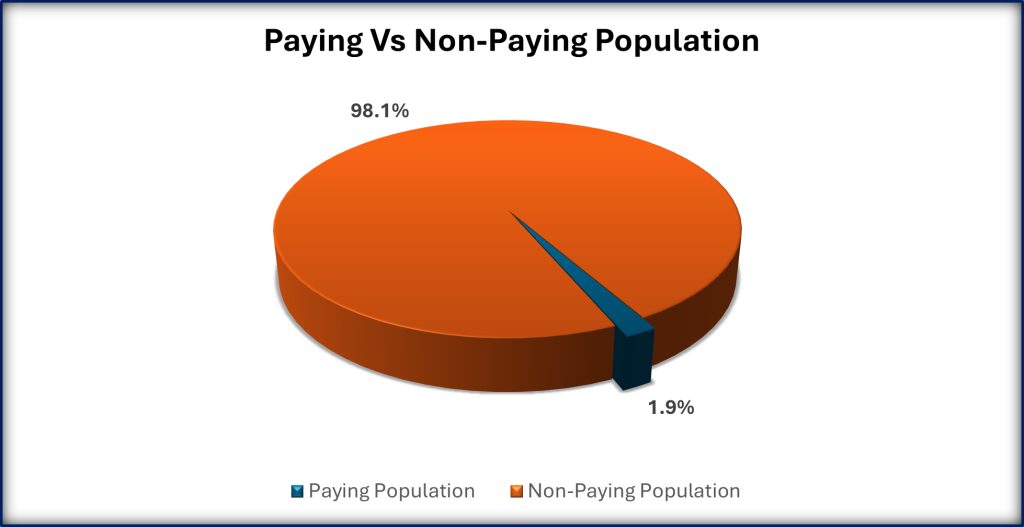
The graph illustrates a concerning downward trend in lodgement compliance, which significantly dropped from 67.4% in 2022 to 56.4% in 2024. Conversely, the revenue contribution from this sector has fluctuated, initially decreasing from 3.1% in 2022 to 2.6% in 2023, but then rebounding to 3.4% in 2024. Geographically, the majority of Non-Profit Organizations (NPOs) are registered in the Suva Branch, while the Rotuma Branch has the fewest registrations. Lastly, Only 2% of the total taxpayer population is actively contributing.
Risk Areas and Mitigation Strategies
We are committed to safeguarding revenue integrity by addressing compliance risks associated with Non-Profit Organizations.
| Risk Area | Description | FRCS Mitigation Strategy |
|---|---|---|
| Lack of knowledge on Taxable Income | Many NPOs still believe all their income is tax exempt. | Public awareness campaign; targeted stakeholder engagement. |
| Non-filing of Income Tax returns | Many NPOs with business or property income are not filing Income Tax returns. | Publish SIG guidance; offer voluntary disclosure window; targeted audits. |
| Incorrect income classification | Some NPOs are incorrectly reporting business or property income as exempt. | Targeted education and post-audit reviews; data matching with VAT filings. |
| Revenue leakage from NPO commercial activities | Commercial income has been untaxed for years, eroding the tax base. | Audit program focused on high-risk NPOs; ongoing monitoring post-audit. |
| Revenue leakage from NPO commercial activities | Commercial income has been untaxed for years, eroding the tax base. | Audit program focused on high-risk NPOs; ongoing monitoring post-audit. |
| Concession and Incentive Abuse | Abuse of concessions while operating commercially beyond scope. | Publish Standard Interpretation Guidelines (SIGs); use risk engine profiling and conduct sector-specific audits. |
| Not Registered for the Right Tax Type | NPOs engaged in taxable activities but fail to register for the appropriate tax type. | Strengthen public awareness through targeted campaigns; provide simple clear guidance (SIGs); encourage voluntary registration via TPOS and direct outreach. |
Last Updated - July 17, 2025