FRCS and FNPF Join Forces to Empower Children of Dilkusha Home and Residents of Homes of Hope Fiji
In a commendable display of collaboration and community spirit, FRCS partnered with the Fiji National Provident Fund (FNPF) to support a voluntary membership drive for the children of Dilkusha Home and Residents of Homes of Hope Fiji.
The initiatives aimed to provide the children and the residents with essential financial and legal documentation to help secure their future. As part of the drive, FRCS facilitated the registration of Taxpayer Identification Numbers (TIN).
This joint outreach effort was more than just a registration exercise; it was a gesture of empowerment. By equipping the children with TINs and JOINT ID Cards, the initiative ensures they are better prepared for future opportunities, including access to education, employment, and financial services.
FRCS expressed its pride in being part of such a meaningful cause.
The event also highlighted the importance of inter-agency collaboration in addressing the needs of vulnerable communities.
Both FRCS and FNPF reaffirmed their commitment to supporting inclusive development and ensuring that no one is left behind.
For assistance related to tax and customs, please contact us on our toll-free number 1326 or email @ info@frcs.org.fj.
FRCS Participates in Lesu Mai Reintegration Event to Empower Returning Workers
FRCS was proud to participate in the Lesu Mai: A Reintegration Event, hosted by the Ministry of Employment, Productivity and Workplace Relations (MEPWR).
This important initiative served as a platform for knowledge sharing and collaboration, aimed at enhancing support for returning workers. The initiative significantly boosted their confidence and deepened their understanding of how to access FRCS services more effectively.
Participants were particularly encouraged to learn about the convenience of the Taxpayer Online Service (TPOS), which allows users to access a wide range of services without the need to queue in person. These services include:
Applying for a Tax Compliance Certificate (TCC), JOINT ID Card and VAT on New Dwelling House
Requesting a Certificate of Exemption for Resident Interest Withholding Tax (RIWT)
Downloading copy of their Tax Identification Number (TIN) letter
Registering for a new TIN and JOINT ID Card for their children
The FRCS team also guided participants on how to conveniently access the latest updates on tax and customs matters through the official FRCS website and social media platforms.
Additionally, they provided valuable insights into the concessions available for returning residents on personal effects and offered step-by-step guidance on registering a new business and fulfilling associated filing obligations.
This digital transformation reflects FRCS’s commitment to making tax and customs services more accessible, efficient, and user-friendly for all Fijians.
FRCS also reaffirmed that all its offices remain open and ready to assist anyone seeking further information or support, underscoring its dedication to public service and community engagement.
FRCS Strengthens Engagement with Technology Partners on VAT Monitoring System Enhancements
As part of its ongoing engagement strategy on the Value Added Tax (VAT) and the VAT Monitoring System (VMS), the Fiji Revenue and Customs Service (FRCS) recently convened a consultative session with accredited Point of Sale (POS) and Electronic Sales Data Controller (ESDC) developers. The session focused on upcoming enhancements to the VMS and the Electronic Fiscal Device (EFD) framework.
This collaborative forum served as a valuable platform for open dialogue on key developments, including the transition from VMS Version 2 to Version 3, alignment with Phase 3 of the 2025/2026 National Budget Announcement, implementation of new VAT requirements, and strategies to address current challenges while improving service delivery.
The session was highly interactive, with developers actively contributing insights, feedback, and innovative ideas. Their engagement is instrumental in strengthening the VMS ecosystem and enhancing the overall taxpayer experience.
FRCS acknowledges the valuable contributions of a number of vendors who attended the session virtually and appreciates their continued support and engagement in this important initiative.
To ensure sustained collaboration and progress, these consultative meetings will be scheduled on a quarterly basis. This will allow FRCS and its technology partners to monitor the progress of key issues and explore new opportunities to ease business requirements and enhance service delivery.
FRCS remains committed to fostering strong partnerships with technology providers to ensure a smooth transition and effective implementation of regulatory changes. This initiative reflects FRCS’s dedication to transparency, collaboration, and continuous improvement in delivering efficient and responsive services to the public.
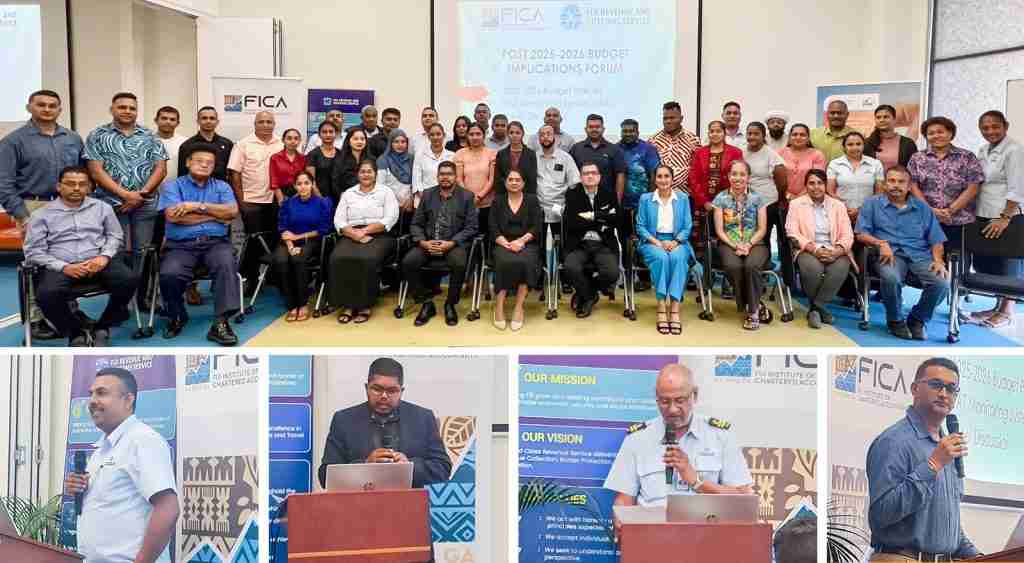
FICA IN COLLABORATION WITH FRCS HOSTS POST 2025-2026 BUDGET IMPLICATIONS FORUM
The Fiji Institute of Chartered Accountants in collaboration with the Fiji Revenue and Customs Service (FRCS) recently hosted a forum based on the 2025-2026 Budget Policies and VAT Monitoring System (VMS) in Suva and Nadi.
The Suva Forum featured impactful discussions led by FRCS representatives. Mr Shavindra Nath, Director of Corporate Services and Chief of Staff at FRCS, provided a comprehensive overview of the 2025-2026 Budget Policies, highlighting VAT adjustments and investment incentives aimed at stimulating economic growth. Mr Rohit Pillay Manager VAT Compliance at FRCS, presented on VMS outlining its objectives and the role it will play in enhancing tax transparency and efficiency.
A dynamic panel discussion followed, featuring representatives from both FRCS and FICA. The panel included Mr Shavindra Nath, Mr Rohit Pillay and Ms. Momina Beg, Director Taxation from FRCS, alongside Ms. Lisa Apted, Partner at KPMG and Ms. Deepa Kapadia, Partner at Grant Thornton from FICA. The dialogue centered on the implications of the 2025-2026 Budget Policies, fostering insightful exchanges amongst the panellists and the attendees.
Continuing the discussions, the Nadi Forum featured an engaging session where Mr Rahul Goundar, Manager Policy presented on the 2025-2026 Budget Policies, offering insights into fiscal priorities. Mr Rohit Pillay followed with a detailed presentation on VMS emphasising its operation and compliance expectations.
The panel discussion brought together FRCS representatives Mr Vilimone Nailotei, Senior Manager, Taxpayer Education, Mr Rohit Pillay and Mr Rahul Goundar alongside FICA representatives Mr Deepak Prasad, Senior Manager at EY and Ms. Radika Raj, Associate Director at KPMG.
The panellists articulated their views assertively. which resonated strongly with the attendees. The interactive session encouraged strong discussions with participants actively engaging through questions and reflections on the presented topics.
Both forums highlighted the importance of open dialogue and collaboration between regulatory bodies and professionals in navigating reforms and technological advancements.
FICA remains committed to facilitating platforms that promote informed discussions, enhance professional understanding and support the successful implementation of national policies. FICA commends FRCS for its continued partnership and looks forward to future engagements that strengthen the accounting profession and contribute to Fiji’s economic development.
Smart Borders, Safer Trade: FRCS Enhances Officer Capabilities with Advanced Targeting Training
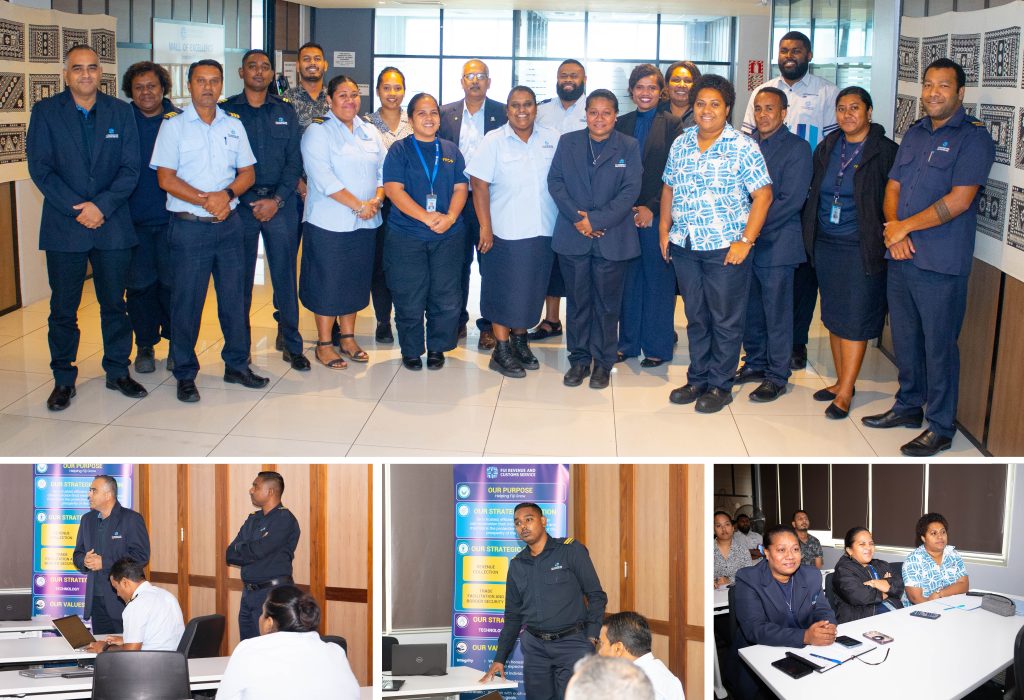
FRCS has taken a major stride in strengthening border security and facilitating trade through its recent Integrated Targeting Centre Workshop. This initiative was designed to equip customs officers with advanced skills to detect illicit goods including narcotics, weapons, and counterfeit products while maintaining the smooth movement of legitimate trade.
Organized by the Integrated Targeting Centre with support from the Port and Air Cargo Control Unit, the workshop brought together frontline officers from Suva Maritime and Suva Cargo. Participants were trained in sophisticated profiling techniques using pre-arrival cargo data, intelligence sharing, and risk-based targeting to accurately identify high-risk consignments. The training was aligned with the World Customs Organization (WCO) SAFE Framework of Standards, ensuring
FRCS’s approach meets global benchmarks for secure and efficient trade facilitation.
A key highlight was the introduction of the 1064 Defender and TruNarc handheld Raman analysers, state-of-the-art tools that enable officers to identify hazardous substances instantly. These devices enhance safety, provide rapid intelligence, and support enforcement decisions in real time.
The workshop also laid the foundation for the operationalization of the Integrated Targeting Centre which is a centralized hub aimed at streamlining risk profiling, intensifying enforcement, reducing duplication, and improving coordination across border units. This initiative is part of FRCS’s broader modernization strategy, which emphasizes data-driven decision-making, technology integration, and continuous capacity building.
By strengthening its targeting capabilities, FRCS is not only bolstering national security but also improving operational efficiency. This includes faster clearance for low-risk cargo, enhanced revenue collection, and more effective detection of customs fraud.
Interactive sessions during the workshop fostered cross-unit collaboration and practical application of new tools, reinforcing FRCS’s commitment to smarter borders and safer trade.
Looking ahead, FRCS is confident in expanding its operations through both intrusive and non-intrusive inspection capabilities, which will be central to the upcoming Container Examination Facility (CEF).
FRCS also extends its sincere appreciation to the United Nations Office on Drugs and Crime for their continued guidance and support in developing resources for the use of inspection technologies in detecting and disrupting drug trafficking at borders. We remain committed to working in partnership with stakeholders and the community to achieve shared border security and trade management goals through strategic planning and ongoing capacity development in response to emerging challenges
FRCS Team Engages Public on FBC’s Na Vakekeli Radio Talk-Back Show to Raise Awareness on 2025–2026 National Budget Policies
FRCS recently participated in FBC’s Na Vakekeli radio talk-back show to raise public awareness on key components of the 2025–2026 National Budget. The session provided an important platform for FRCS to engage directly with listeners and clarify budget-related changes.
A central topic of discussion was the reduction in the Value Added Tax (VAT) rate from 15% to 12.5%. FRCS representatives explained that this policy change is part of the Government’s broader intention to ease the cost of living and ensure that economic relief reaches everyday consumers. To support this initiative, FRCS is actively working as part of the Joint Taskforce on Price Surveillance, alongside the Ministry of Finance (MoF), the Fijian Competition and Consumer Commission (FCCC), and the Consumer Council of Fiji (CCF). The taskforce is conducting market inspections to ensure that the VAT reduction is accurately reflected in final retail prices.
The team also provided insights into the VAT Monitoring System (VMS), highlighting its role in improving compliance and transparency across businesses. Updates on customs tariff reductions and the personal importation process under Code 212 were also shared, helping listeners better understand how these changes affect their purchasing and importing activities.
Throughout the program, FRCS officers responded to a wide range of questions from listeners, offering clear and practical guidance. The session reinforced FRCS’s commitment to public engagement and education, ensuring that individuals and businesses are well-informed and supported during the implementation of new budget measures.
Members of the public seeking further assistance or clarification are encouraged to contact FRCS via the toll-free number 1326 or email info@frcs.org.fj.
Safeguarding Consumer Interests: FRCS Joins Forces with MoF, FCCC, and CCF for Coordinated Price Surveillance
FRCS, in close coordination with the Ministry of Finance (MoF), the Fijian Competition and Consumer Commission (FCCC), and the Consumer Council of Fiji (CCF), is actively engaged in monitoring market prices following the reduction of Value Added Tax (VAT) from 15% to 12.5% and customs duties on various items, as announced in the 2025–2026 National Budget.
This initiative is being carried out under the Joint Taskforce on Price Surveillance, which is committed to ensuring that the benefits of the reduction in VAT and customs duties are accurately reflected in final retail prices and that the Government’s intention to ease the cost of living is fully realized. The taskforce is conducting inspections and assessments to verify compliance and promote fair pricing practices.
Beyond enforcement, the taskforce aims to translate policy into tangible benefits for Fijians by fostering transparency and accountability. FRCS is working closely with businesses to provide guidance and support in implementing the new budget measures and ensuring full compliance with tax regulations.
Consumers are encouraged to remain vigilant and check that tax invoices or receipts issued by VAT registered businesses correctly reflect the 12.5% VAT rate.
For further assistance or clarification, members of the public can contact FRCS via the toll-free number 1326 or email info@frcs.org.fj.
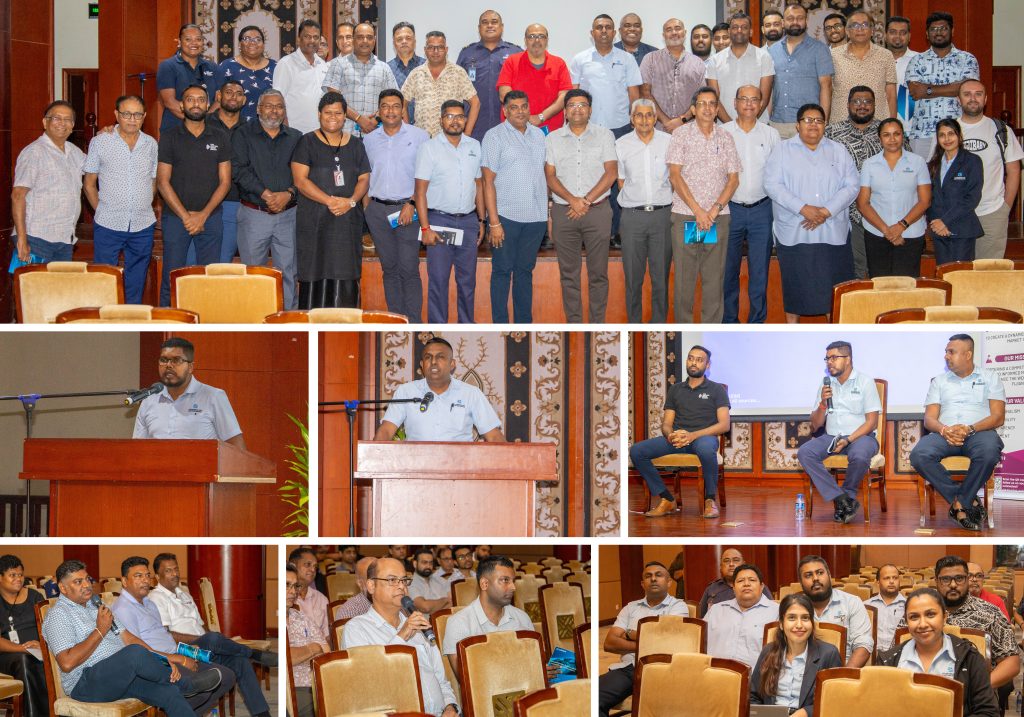
FRCS continues to champion transparency and collaboration through a series of impactful education and awareness sessions focused on the 2025–2026 National Budget, the VAT Monitoring System (VMS), and other key tax-related developments.
Recent sessions brought together members of the Suva Retailers Association, the Retail & Wholesale Council of the Fiji Commerce and Employers Federation (FCEF), and the Chinese Association of Fiji.
These engagements were led by FRCS’s Policy and VAT teams, who unpacked critical components of the national budget, including revenue policy themes, VAT updates, tariff adjustments, incentives, and tax deductions. Participants gained valuable insights into how these changes affect their business operations and compliance responsibilities.
The VAT team delivered a comprehensive overview of the VMS, covering Electronic Fiscal Device (EFD) Regulations, invoicing standards, registration procedures, and system architecture. Businesses were guided on how to seamlessly integrate VMS into their existing practices, with tools and support available to ensure a smooth transition.
Attendees had the opportunity to engage directly with FRCS officers, ask questions, and receive tailored advice. The sessions fostered a spirit of collaboration and mutual understanding between government agencies and the private sector.
FRCS remains committed to supporting businesses through ongoing awareness initiatives, ensuring they are well-informed and prepared for the successful implementation of the 2025–2026 National Budget and VMS.

 In a commendable display of collaboration and community spirit, FRCS partnered with the Fiji National Provident Fund (FNPF) to support a voluntary membership drive for the children of Dilkusha Home and Residents of Homes of Hope Fiji.
 FRCS was proud to participate in the Lesu Mai: A Reintegration Event, hosted by the Ministry of Employment, Productivity and Workplace Relations (MEPWR).
 As part of its ongoing engagement strategy on the Value Added Tax (VAT) and the VAT Monitoring System (VMS), the Fiji Revenue and Customs Service (FRCS) recently convened a consultative session with accredited Point of Sale (POS) and Electronic Sales Data Controller (ESDC) developers. The session focused on upcoming enhancements to the VMS and the Electronic Fiscal Device (EFD) framework.
 The Fiji Institute of Chartered Accountants in collaboration with the Fiji Revenue and Customs Service (FRCS) recently hosted a forum based on the 2025-2026 Budget Policies and VAT Monitoring System (VMS) in Suva and Nadi.
 FRCS has taken a major stride in strengthening border security and facilitating trade through its recent Integrated Targeting Centre Workshop. This initiative was designed to equip customs officers with advanced skills to detect illicit goods including narcotics, weapons, and counterfeit products while maintaining the smooth movement of legitimate trade.
 FRCS recently participated in FBC’s Na Vakekeli radio talk-back show to raise public awareness on key components of the 2025–2026 National Budget. The session provided an important platform for FRCS to engage directly with listeners and clarify budget-related changes.
 FRCS, in close coordination with the Ministry of Finance (MoF), the Fijian Competition and Consumer Commission (FCCC), and the Consumer Council of Fiji (CCF), is actively engaged in monitoring market prices following the reduction of Value Added Tax (VAT) from 15% to 12.5% and customs duties on various items, as announced in the 2025–2026 National Budget.
 FRCS continues to champion transparency and collaboration through a series of impactful education and awareness sessions focused on the 2025–2026 National Budget, the VAT Monitoring System (VMS), and other key tax-related developments.