
Customs operations are at the heart of Fiji’s trade facilitation and revenue protection. In an evolving global trade environment, new risks continue to emerge, making robust Customs compliance more important than ever for Fiji’s economic stability and national security. Fiji’s Customs faces a range of challenges, from valuation manipulation and misclassification of goods, to abuse of duty concessions, and poor record keeping. FRCS is committed to fostering a culture of voluntary compliance across importers, exporters, Customs agents, and brokers, while leveraging modern technology, global partnerships, and risk-based enforcement to safeguard Customs integrity.
Customs Import & Export Trend Analysis
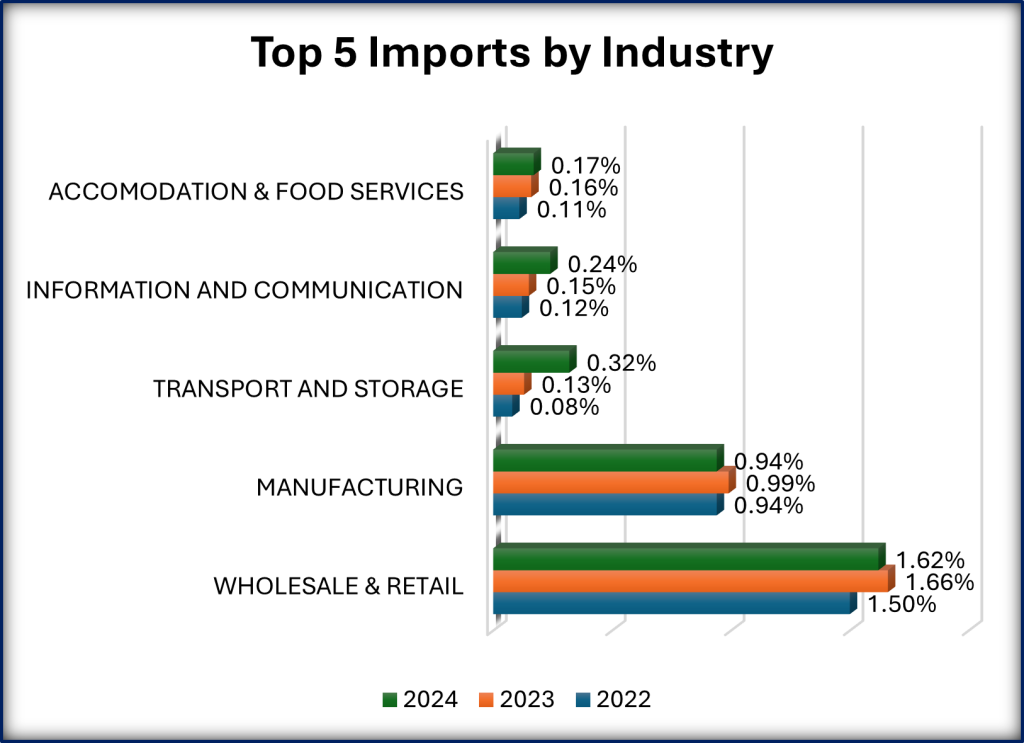
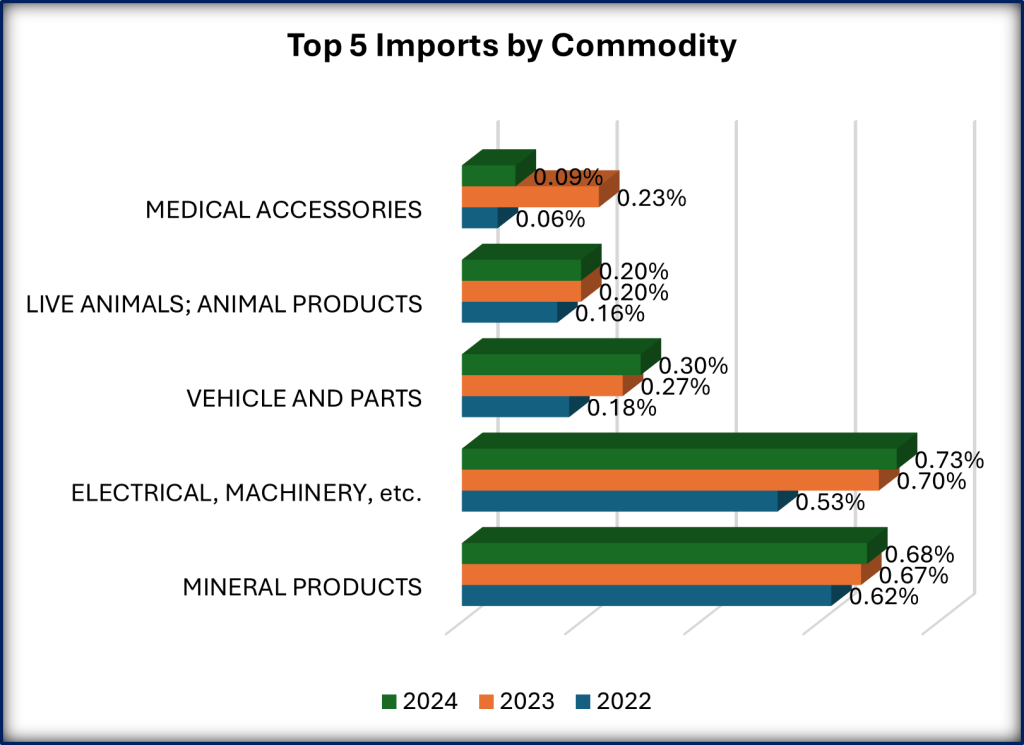
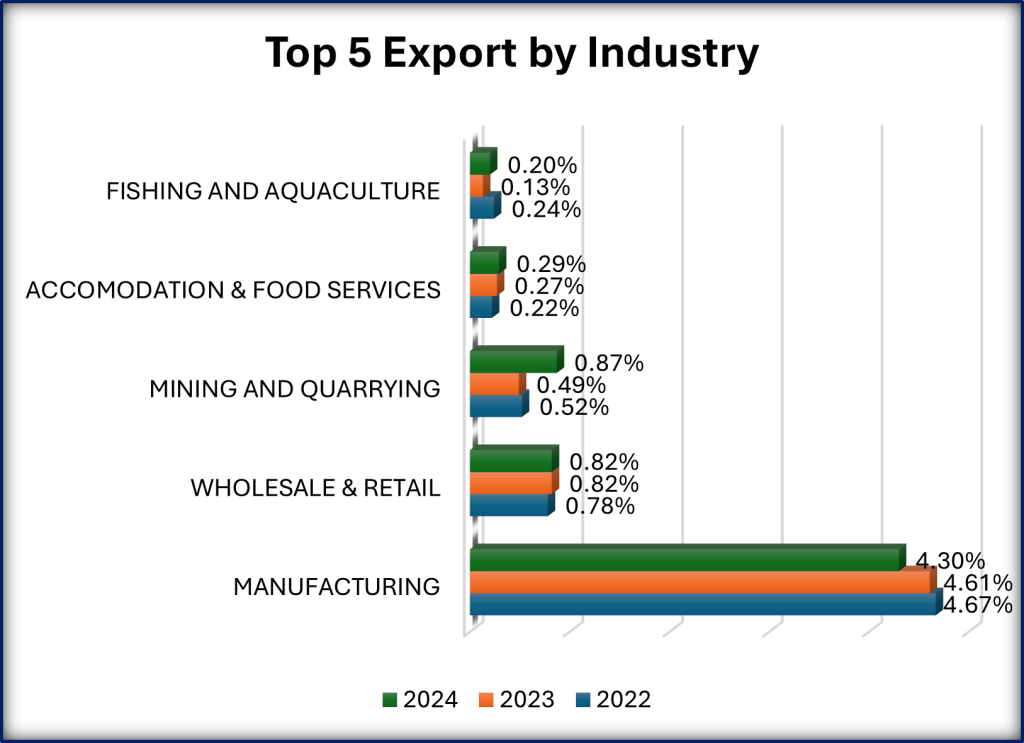
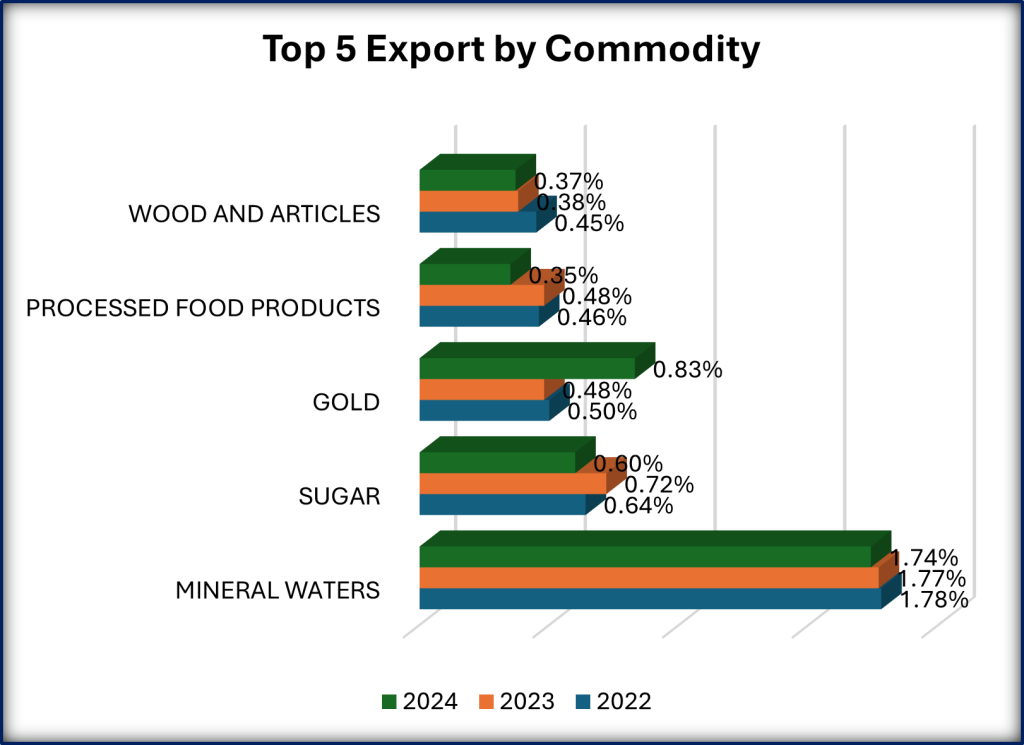
The graphs indicate that the Wholesale, Retail, and Manufacturing sectors are the primary contributors to both import and export activities, with Manufacturing playing a significant role in both areas. Notably, there has been a marked increase in the importation of electrical machinery, mechanical equipment, and related components. Mineral Products, encompassing various petroleum-based items, represent a consolidated category in the import data. On the export side, Mineral Waters continue to be the leading source of revenue, followed by a notable rise in gold exports.
Risk Areas and Mitigation Strategies
Helping you navigate customs with confidence – making trade smoother, safer, and more transparent for all.
| Risk Area | Description | FRCS Mitigation Strategy |
|---|---|---|
| Incorrect Customs Valuation | Undervaluing imports/exports to evade duties or claim excessive refunds. | Use data analytics, advanced profiling, and global price databases to validate declared values; conduct targeted audits. |
| Misclassification of Goods | Deliberate misclassification to lower duty rates. | Promote Advance Rulings and publish Standard Interpretation Guidelines; run targeted post-clearance audits. |
| Abuse of Duty Concessions | Concessions misused by ineligible parties, e.g. middlemen or unqualified importers/exporters. | Strengthen validation of concession applications. |
| False Export Declarations | Misreported export values to inflate refund claims or enable money laundering. | Cross-match Customs + banking data and monitor export transactions using Cargo Targeting System. |
| Poor Documentation & Record-Keeping | Incomplete or inaccurate documents submitted by importers/exporters and brokers. | Target education and awareness; implement penalties for repeat offenders; promote clear record-keeping guidelines. |
| Customs Agent Non-Compliance | Some Customs agents engage in systematic misdeclaration or facilitation of fraud. | Customs Agent Demerit Point System implemented to promote compliance and accuracy; ongoing agent risk profiling; apply sanctions and possible license suspension. |
| Bonded Warehouse Leakages | Goods not cleared or reported properly, leading to delayed or lost revenue. | Run continuous warehouse monitoring; issue expiry reminders; conduct targeted spot checks and audits. |
| Vessel Prior Notice Non-Compliance | Some vessels fail to give required prior notice of passengers, crew, cargo, and vessel details, delaying clearance and risking non-compliance. | Enforce 72-hour prior notice for cargo vessels and 9-hour prior notice for cruise liners; impose penalties for non-compliance; enhance communication and automated reminders to operators. |
Last Updated - April 27, 2026