
PWPDP Empowers Women in Customs and Strengthens Security Across the Pacific
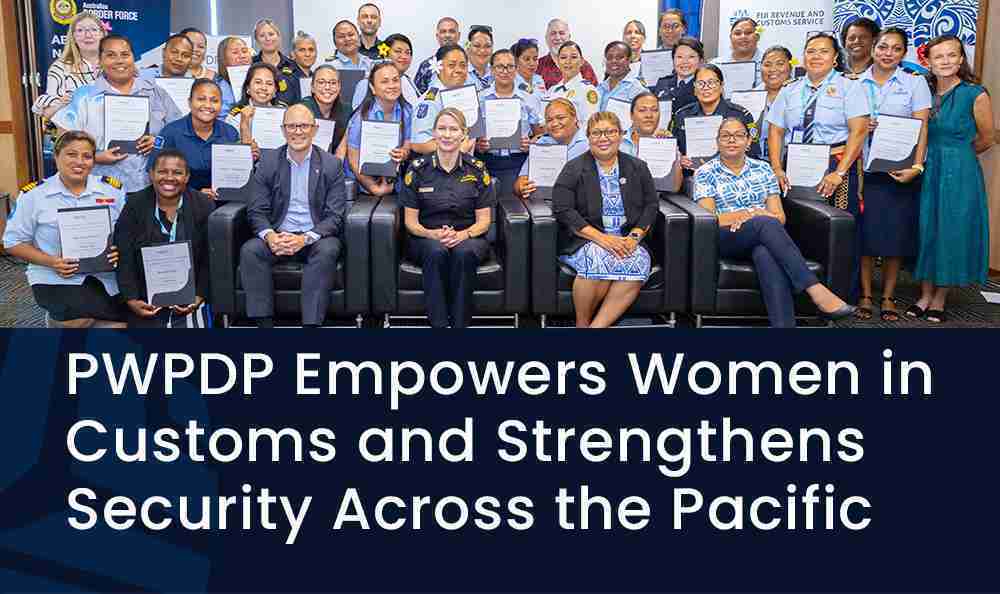
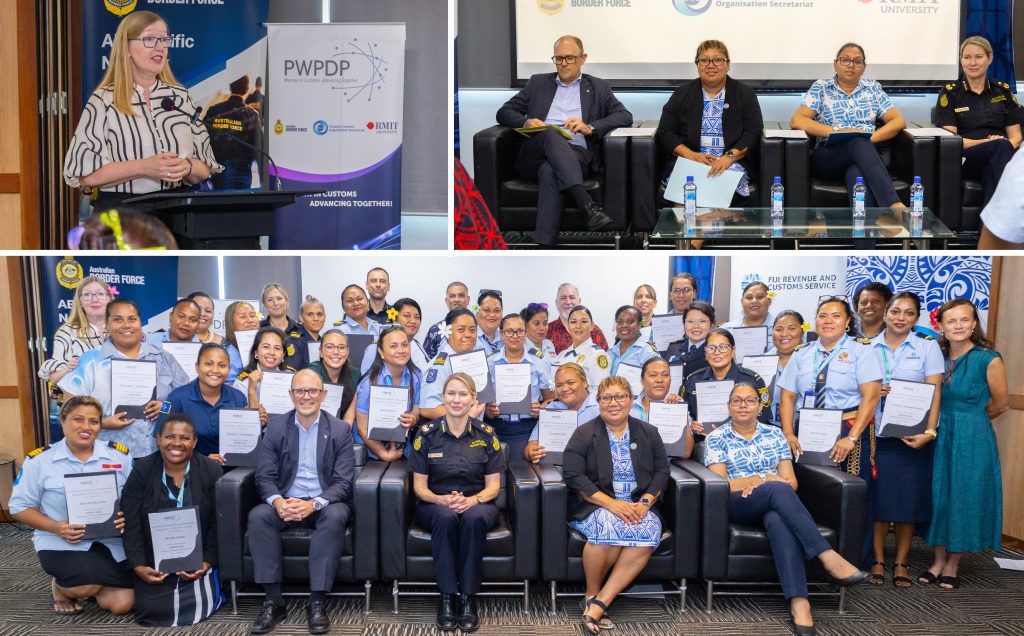 Congratulations to the thirty emerging female customs officers, including five from the Fiji Revenue and Customs Service (FRCS), who graduated from the Pacific Women’s Professional Development Program (PWPDP) today.
PWPDP, an initiative by the Australian Border Force (ABF) in collaboration with the Oceania Customs Organisation (OCO) and the Royal Melbourne Institute of Technology (RMIT), aims to empower women in customs roles across the Pacific, enhancing their career prospects and strengthening regional security.
This six-week program equipped participants with essential leadership skills, preparing them for future challenges in global trade and fostering strong professional networks.
FRCS CEO, Mr. Udit Singh, highlighted the program’s significance in building a future where women in customs can thrive and lead with confidence, integrity, and innovation.
The program included a three-week online phase followed by a nine-day residential phase at the FRCS Headquarters in Suva.
FRCS Director of Customs and Border, Ms. Shelini Kumar, also congratulated the graduates, emphasizing that this milestone marks the beginning of transformative journeys for their careers and communities. She praised their courage, resilience, and determination in stepping out of their comfort zones and embracing growth.
Initiatives like PWPDP are crucial as customs remains a male-dominated field globally, with women comprising only 36% of the workforce and holding less than a quarter of management positions.
This year, participants from 17 Pacific nations, including the Commonwealth of the Northern Mariana Islands, Cook Islands, Federated States of Micronesia, Fiji, Guam, Kiribati, Nauru, New Caledonia, New Zealand, Papua New Guinea, Samoa, Solomon Islands, Timor-Leste, Tonga, Tuvalu, Vanuatu, and Australia, took part in the program.
ABF Deputy Commissioner Regional Operations Vanessa Holben said the program was a testament to the ABF’s commitment to building a stronger Pacific customs family.
“By investing in the development of women in customs, we not only enhance regional capacity but also create inclusive environments. We know diverse perspectives are critical in developing innovative solutions to addressing border security challenges,” Deputy Commissioner Holben said.
Last Updated - May 15, 2025