World Bank Assists Trade Facilitation Agencies Draft Single Window Vision for Fiji

Twenty-three (23) trade facilitation agencies have gathered to draft a workable Single Window vision customised for Fiji to ensure secure trade.

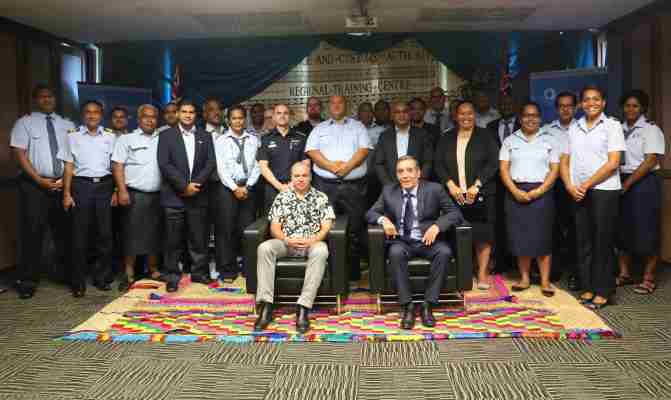
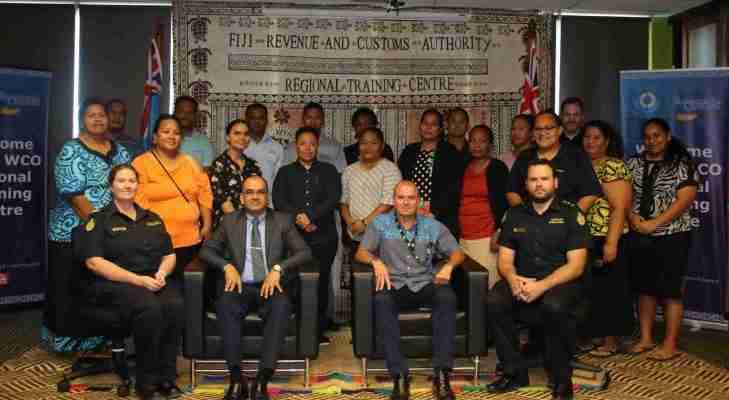
World Bank facilitators are currently conducting a Single Window workshop for these agencies organised by the National Trade Facilitation Committee (NTFC) at the Revenue and Customs Complex,  WCO Regional Training Centre in Nasese, Suva from 14th – 15th August, 2018.

While opening the workshop this morning, Fiji Revenue and Customs Service (Revenue and Customs) Chief Executive Officer and Chair of NTFC, Mr. Visvanath Das said the Fijian Government has given a firm commitment to implement single window following the ratification of the Trade Facilitation Agreement on 22 February 2017, which aims to increase efficiency and effectiveness for trade facilitation agencies.

“Fiji’s position as the hub of the Pacific and the trade and economic development opportunities available through the global trade opportunities as well as regional trade agreements needs to be capitalized on,” Mr. Das said.

Mr. Das said the twenty-three agencies aspired to construct one single window clearance system for traders and global supply chain actors.  He emphasized that every journey begins with a single step and highlighted the importance of each agency taking ownership.

Present at the workshop, Permanent Secretary for Ministry of Industry, Trade & Tourism, Mr. Shaheen Ali acknowledged the efforts of the Fijian business community, for working with the Government in achieving its objectives of improving Fiji’s overall trade performance and helping to establish Fiji as the modern hub of the Pacific, as set out in the 5-Year and 20-Year National Development Plan.

Mr. Ali said the creation of a Single Window system, for the coordinated submission and flow of import export documents, is one of the most effective ways of expediting the movement and clearance of goods and ultimately improving trade.

“Essentially, a Single Window can be described as a system that allows traders to lodge documentation to achieve entry, clearance, and release of their goods, from a single convenient location. A Single Window is intended to save time, eliminate redundancy, and lessen the administrative burden on the global trading community,” he said.

“In practice, the long-term objective is to transfer from a paper-based procedure to a single window electronic system. In order for the Single Window system to be effective, close cooperation and coordination between all departments and authorities involved are vital,” he added.

Mr Ali said in order to progress the work on single manifest, a Time Value Survey is currently being undertaken, which will determine the actual time and cost savings of moving from the current system to the single manifest.

“In addition, Revenue and Customs is piloting an electronic platform, which links all trade facilitation agencies to the ASYCUDA World. The agencies will be able to access manifests electronically and screen consignments for either clearance or further investigation,” he added.

The workshop concludes on Wednesday 15 August.

END

Undeclared R22 gas cylinders detained by Customs at Suva Wharf

The Fiji Revenue and Customs Service (Revenue and Customs) Customs Border Maritime Compliance Team intercepted 50 R22 Gas Cylinders which is an Ozone depleting substance from a fishing vessel at the Suva Wharf yesterday.

After receiving advance notification, the Compliance team noted the vessel was in the Australian EEZ but avoided Australian Border Officials and entered Fiji waters.

“This was suspicious and thus the vessel was flagged by our Customs Border Maritime Compliance Team comprising of Customs Officials searched the vessel and was successful in detaining Ozone depleting gas cylinders,” Revenue and Customs Chief Executive Officer, Mr. Visvanath Das confirmed.

“The vessel falsely declared the amount of R22 Gas Cylinders on board and it was concealed in a manner with a clear intention of smuggling the Cylinders,” Mr. Das said.

“I commend the efforts of Customs Border Maritime Compliance Team in detecting the smuggling of the ozone depleting gas,” he said.

Mr. Das assured Revenue and Customs commitment in supporting the well-being of the environment and working in partnership with relevant stakeholders in combating illegal imports of ozone depleting substances.

The cylinders have been handed over to the Department of Environment.


END

WCO Passenger Control Workshop to strengthen security

The Fiji Revenue and Customs Service (Revenue and Customs) in collaboration with World Customs Organisation (WCO) and Japan Customs is conducting a four-day WCO Sub-Regional workshop on Passenger Control.

The workshop is currently underway at the WCO Regional Training Centre at Revenue and Customs Complex from 6-9 August, 2018.

A total of 16 participants from Papua New Guinea, Samoa, Tonga, Timor-Leste, Vanuatu, Mongolia including Customs Officers from Revenue and Customs will be learning about passenger control and security challenges from WCO, Australia Border Force and New Zealand Customs experts.

This workshop is part of WCO’s Asia/Pacific Security Project, which was launched in March 2017 in Bangkok.

While opening the workshop this morning, Revenue and Customs Chief Executive Officer, Mr. Visvanath Das stressed the need to collaborate with WCO members to strengthen passenger controls and security.

“Passenger Controls is a security challenge. The ideal would be one where a coordinated approach and an effective risk analysis and targeting approach is utilized thorough the use of advanced passenger information. But we all know that the reality on the ground is different – we all face difficulties/challenges in achieving this. Nevertheless, we know that a coordinated border approaches can turn these challenges into opportunities creating win-win for all parties,” Mr. Das said.

“Asia and the Pacific region have become the centre of global attention due to being the powerhouse for rapid global economic growth in the more recent times – in terms of trade flows, illicit financial flows, drugs and people flows,” he said.

“Together with the rapid economic growth and explosion of travel and tourism, passenger controls have become a topic of pertinence for many customs administrations. The refugee crisis and conflict and terrorism activity in some parts of the world have also triggered a need to prioritize the passenger control processes and systems we have in place,” he added.

Mr. Das said effective border mechanisms against potentially dangerous persons can be greatly assisted by co-operation between Customs administrations and other competent border control agencies at the national and international levels, and that exchange of information can significantly aid risk assessment and targeting and, as a consequence, improve the facilitation of legitimate travel.

“The clearances at border crossings can be expedited if the interventions are based on an integrated risk management framework which addresses the concern of all the agencies at the border,” he said. 

“The proper balance between the needs of Customs enforcement and the facilitation of legitimate travel can only be achieved if Customs enforcement is intel and risk based,” he said.

Mr. Das urged all participants to learn as much as they could from the workshop and apply the same to their respective customs administrations.

“The safety and security of our nations and our people are in our hands – so we need to enhance our capability and competency – and this workshop provides an opportunity to do so,” he said.

Japan Customs Deputy Director Customs and Tariff Bureau, Mr. Norikazu Kuramoto expressed similar sentiments.

“We are gathered here to talk about passenger control which is the key component of the WCO security project. The WCO experts from Australian Border Force and New Zealand will share a good deal of the know-how and good practice. Let us learn, exchange views and connect with each other and take advantage of this golden opportunity,” Mr. Kuramoto said.

“We implemented the WCO security project in the Asia-Pacific region last year. We keep ourselves committed to the program and contribute to the regional wide air force to bring better security,” he said.

WCO Facilitator from Brussels, Mr. Wesley Ferris commended Fiji Revenue & Customs training room facilities provided for the workshop and looks forward to interacting with the participants.

The workshop will end on Thursday 9th August.   

END

Outer Islands urged to be vigilant – Das

The Fiji Revenue and Customs Service (Revenue & Customs) Chief Executive Officer, Mr. Visvanath Das is encouraging people in the outer islands to report any suspicious activities out at Sea / Land to Customs.

This is after several parcels of brown packages proved to be Cocaine contained within were discovered on separate occasions in the Lau group.

Mr. Visvanath Das reiterated that Customs Officers have vast powers under the Customs Act and other laws of Fiji in relation to our borders, which Fijians need to be aware of and not hesitate to call Customs if they come across any suspicious discoveries / activities out at Sea / Land.

“Once again the people of Lau Group played a vital role in informing Revenue and Customs when the packages were discovered on the island. We commend the efforts of the Islanders and the Turaga Ni Koro for contacting us,” Mr. Das said.

“With the assistance of the Fiji Navy and New Zealand Naval Vessel Taupo, the Revenue and Customs Maritime Surveillance team successfully brought the packages to the Naval base last week and handed it over to Fiji Police for further investigations,” he said.

Mr. Das said people in the outer islands need to be vigilant and inform Customs of any suspicious activities on island shores.

To date, a total of 40 packages containing bars of Cocaine have been discovered on the Lau Group island shores with a value of more than AUD$20million.

“We are working closely with border agencies on a national and international level for the purpose of strengthening Maritime Surveillance of our border and the region and we need the support of the people to protect our way of life,” Mr, Das said.

Revenue and Customs is also reaching out to other islands that are part of our Coastal Watch program for assistance and the general public to report any illegal or suspicious activities to Customs on 990 9065/ 324 3000 or our hotline 1326.

“Together with stakeholders we are going to great lengths to protect our borders. It is also your responsibility as a citizen of this country to help Fiji grow and report any illegal/criminal activities at our borders,” Mr. Das added.

END

VMS Compliant Businesses Need to Issue Fiscal Receipts

The Revenue and Customs Service is encouraging members of the public to request for fiscalised receipts for goods and services from those group of businesses who are regulated to issue such receipts.

These businesses include Hardware Companies, Accounting Firms, Medical Practitioners, Travel Agencies, Law Firms, Supermarkets and Pharmacies.
Under the Tax Administration (Electronic Fiscal Device) Regulations 2017, all accredited vendors should issue a fiscal invoice/receipt to a customer. The Revenue and Customs Service will soon be issuing notices to businesses to display near their POS systems, stating that they are regulated and should be issuing fiscal receipts.

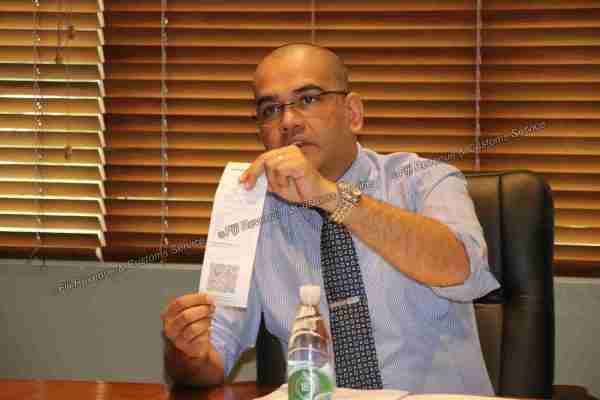
“Customers shopping at supermarkets and pharmacies which have been fiscalised, should receive the new fiscalised receipts which has a QR code allowing the receipt to be scanned and verified. We urge customers to scan and verify their receipts using the FRCS Receipt Verificator app. You can download the app on your smartphone. It is free of charge and available on Google Play or Apple Store,” the CEO said.

“Those businesses that do not currently fall within either group are also welcome to come on board earlier, if they have appropriate systems in place and wish to do so. It will be a requirement in the near future that all business will need to be complaint.”

A free Point of Sale (POS) application is also made available by Revenue and Customs and is compatible with smart phones and tablets (Android and IOS phones) and can be used by small businesses. However, this is only ideal for small businesses.

The VAT Monitoring System (VMS) was launched in 2017 and to date the Revenue and Customs has accredited 16 POS systems and external sale devices.

The full details of these suppliers can be downloaded from our website https://www.frcs.org.fj/our-services/vat-monitoring-system-vms/accredited-pos-esdc/.

Businesses who need assistance with becoming compliant can refer to the Step by Step Instruction Guide which is also available on our website www.frcs.org.fj.

We also encourage consumers to call our hotline on 1326 to report cases where they do not receive fiscalized receipts and provide the names of businesses as well as a copy of the receipts or invoices received. Taxpayers can also email their complaints and receipts on EFDcompliance@frcs.org.fj

END

Revenue and Customs, first to receive Anti-Corruption Policy

The Fiji Revenue and Customs Service is the first organization in the Fiji and the South Pacific to receive an Anti-Corruption Policy from the Fiji Independent Commission against Corruption (FICAC). The policy which was received on Friday also sets the platform on how the Revenue and Customs is pro-active towards its operations.

While receiving the Anti-Corruption Policy, Chief Executive Officer Mr. Visvanath Das said that this event re-confirms the step Revenue and Customs is taking towards its world class journey.

“The role we play in the Fijian economy is critical. We raise about 90 to 95 percent of total government revenue that funds government expenditure and therefore it is critical that tax and customs officials are of highest caliber and standards.”

“We are working towards being a world class organization. We need to have certain values to take us to that level. World class means having highest level of values and integrity”, Mr. Das said.

“Our sincere gratitude and appreciation to (FICAC for training our officers and providing them with basic information and tools to fight corruption in the organization”.

FICAC Principal Corruption Prevention Officer Ms. Arti Naidu congratulated FRCS on this milestone achievement which makes them the first not just in Fiji, but in the South Pacific region.

“Today you have sent out a very strong message not only to your partners but also to your stakeholders what it is you stand for and how you see ethical leadership,” she affirmed.

“It actually shows that you’re proactive about what is happening here, how your operations are done and that you’d like to put in measures before things go wrong.”

She encouraged the FRCS staff and management to take the Anti-Corruption Policy and not just live it by example but to be the example and set the benchmark really high for other organizations.

END

Customs alerted of drug find on Island shores

The Fiji Revenue and Customs Service received information that there were bars found on an Island in the Lau group believed to contain illicit drugs.

Upon receiving the information, Revenue and Customs in collaboration with Fiji Police and the Fiji Navy ensured the securing of these bars from the island.
A total of 31 bars weighing 40 kilograms were retrieved and secured and after testing were confirmed to be Cocaine. The value of these illicit drug is estimated to be worth AUD$20 million.

“We commend the efforts of the people of the Island and those who ensured that Revenue and Customs was immediately alerted about the drugs found on the Island,” Revenue and Customs Chief Executive Officer, Mr. Visvanath Das said.

“It is this kind of partnership we would like to establish with Islands around Fiji and villagers along the coastline through our Coast Watch initiative which we launched in January this year,” Mr, Das said.

“Surveillance in coastal communities and seas are an ongoing challenge for Customs, however, with such assistance and cooperation from Islanders and villagers, we can aim to protect our borders from illicit trade,” he said.

Mr. Das also reiterated the importance of contacting Customs first in relation to such cases.

“Report any illegal or suspicious activities to Customs on 9925764/ 3243000 or our hotline 1326,” Mr. Das said.

The Commissioner of Police Brigadier General Sitiveni Qiliho said information was received of the find whereby all stakeholders worked together to secure the drugs.

“The actions by the people of the Island is truly commendable and we are grateful to have members of the community who are willing to assist our efforts in the war against drugs”.

“The drugs are now in our custody and we will be working closely with the Fiji Navy and Customs throughout the investigation process”.

The drugs are now under Police custody.

Police investigations continue.

END

Ammunition stash located on yacht

Following a search by Customs in Savusavu of a New Zealand based yacht, the Captain and two crew-members are now in Police Custody.

The search by Customs Officers led to the seizure of a large quantity of a mix of different ammunition types.

 “Customs is the first point of contact for all travel and transit at our borders and we take this responsibility seriously. Yet again our intelligence and profiling processes are determining high risk vessels and collaborative efforts with our partners the Fiji Police and Navy has led to this successful seizure”. Revenue and Customs Chief Executive officer, Mr. Visvanath Das said.

“Just last weekend we discovered a massive drug find on an Australian based yacht and once again our officers dutifully exposed another smuggling attempt,” Mr. Das said.

“I commend the collaboration of the relevant Border Enforcement Agencies for their efforts in ensuring that our borders are safe,” he said.

“We will continue to work with local Border Agencies and Customs partners in New Zealand and Australia to ensure we continue to develop best practice processes and procedures to combat illegal trade,” he added.

The Commissioner of Police Brigadier General Sitiveni Qiliho said Fiji continues to quash the notion that a small Pacific Island nation will not be able to effectively police its borders.

“The latest joint operation is again bringing to the forefront the effectiveness of the inter-agency collaboration between law enforcement agencies both here in Fiji and with international law enforcement partners”.

“The latest seizures and interceptions made at our points of entry shows the increased level of collaboration between all agencies involved, and we continue to look at ways to improve the status quo so that those involved in these illegal trades will know that our borders are being monitored”.

Police investigations continue.

For more information, call Revenue and Customs Manager Marketing, Irene Miller on 9926170 and Police Media, Ana Naisoro on 9905999.

END