FRCS Conducts Training on TPOS for Cooperatives

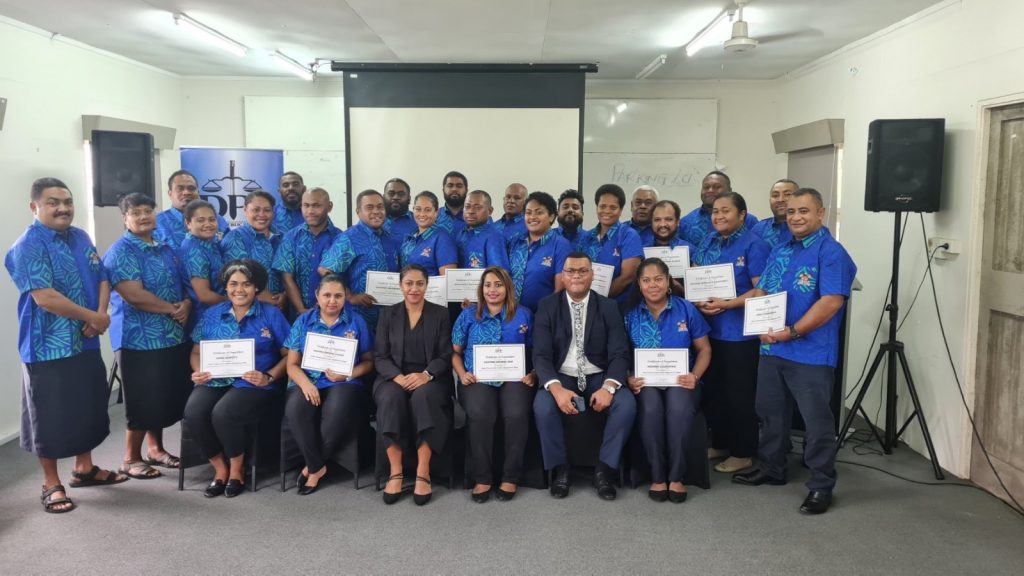
We wish to thank the Ministry of Trade, Co-operatives, Small and Medium Enterprises and Communications (MTCSME) for extending an invitation to us to deliver an interactive training on the Taxpayer Online Service (TPOS) for the Cooperatives.

During the two- day training, our team educated and provided demonstration on a number of tax processes including Pay-As-You-Earn (PAYE), Value Added Tax (VAT), Fringe Benefits Tax (FBT), Corporate Income Tax (CIT), Provisional Tax (PT), and Tax Compliance to the participants.

Cooperatives in Fiji operate in different sectors and are closely linked with economic and social development of the nation.

The representatives used the training to gain insights into the tax processes as well as better understand FRCS’s online systems.

Our Education team continues to conduct similar training for all taxpayers.

New Zealand Prime Minister, Rt Hon. Christopher Luxon Visits the Fiji Detector Dog Unit (FDDU)

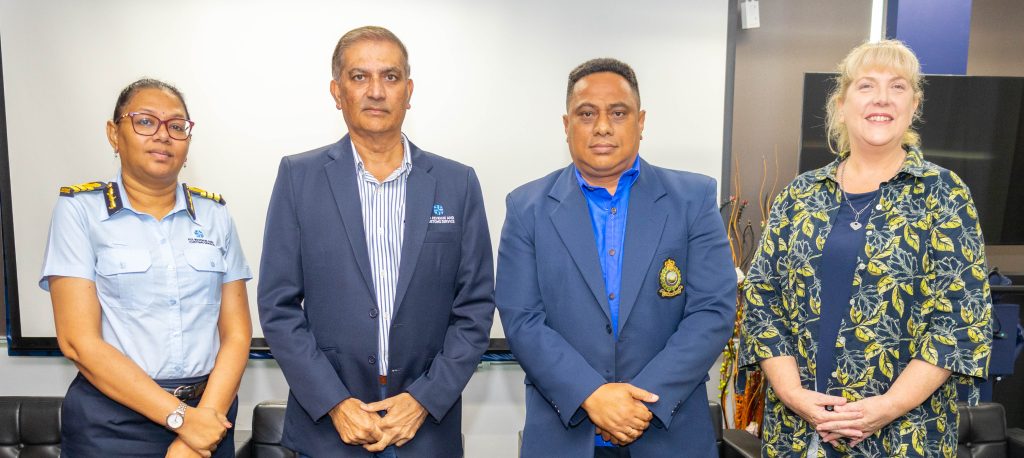
Our team were pleased to brief the New Zealand Prime Minister, RT Hon. Christopher Luxon on their work at the Fiji Detector Dog Unit (FDDU) during Mr. Luxon’s visit to FDDU this afternoon.

Impressed by the excellent capability of FDDU and the dedication of the handlers, Mr. Luxon stated that the NZ Government will continue to support the FDDU as best as it can.

FDDU is a joint initiative of the Fiji Revenue and Customs Service (FRCS) with the Fiji Police, the New Zealand Customs and the New Zealand Police to strengthen Fiji’s border security, by countering transnational organised crime.  The Unit has seen several significant successes in detection and seizures of prohibited goods including illicit drugs, contraband and currency.

We thank the New Zealand Government for the supporting the fantastic dog search capability in Fiji.

FRCS holds Tax Agent’s Forum in West

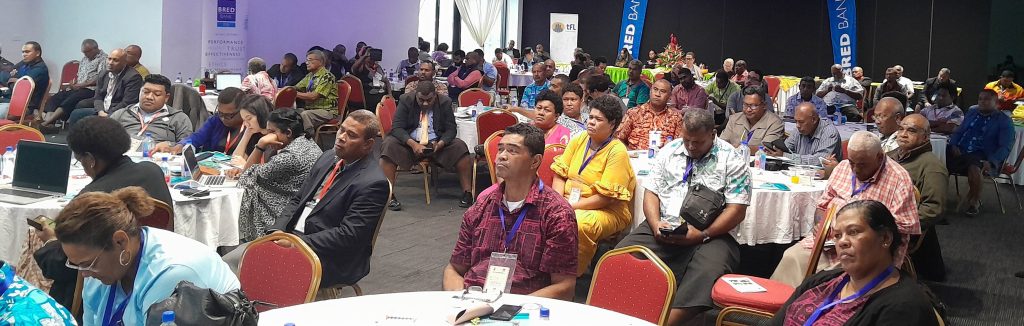
Recently, we held a forum for the registered tax agents in the Western Division as part of our continuous efforts to actively engage with them.

Tax agents play a vital role in Fiji’s tax system. While welcoming them to the forum, our CEO, Mr. Udit Singh stated that FRCS actively seeks to grow a trusted partnership with our customers and partners including the tax agents. 

“FRCS has made a commitment to maintain its focus on being a customer centric organization. Central to this is our commitment to listen, gather feedback, implement enhanced business processes not only focused on improving customer experience but also reducing the cost of doing business,” Mr. Singh said.

“From our perspective, we strive to make it easy for all our taxpayers to actively participate in the tax system and pay their fair share of taxes. Tax agents play a vital role in ensuring that your clients have the intrinsic motivation to pay their fair share of taxes. This is in the sense of advising the clients to be honest in preparing their financial statements and lodgment of their returns.”

During the forum, our team also emphasized on the compliance requirements in accordance with the Tax Agent’s Code of Conduct 2018 and updated on the enhancements made on the Taxpayer Online Service (TPOS) processes.

The forum ended with a networking session between the tax agents and our team.

ABF Conducts Capacity Building on AEO for FRCS Staff


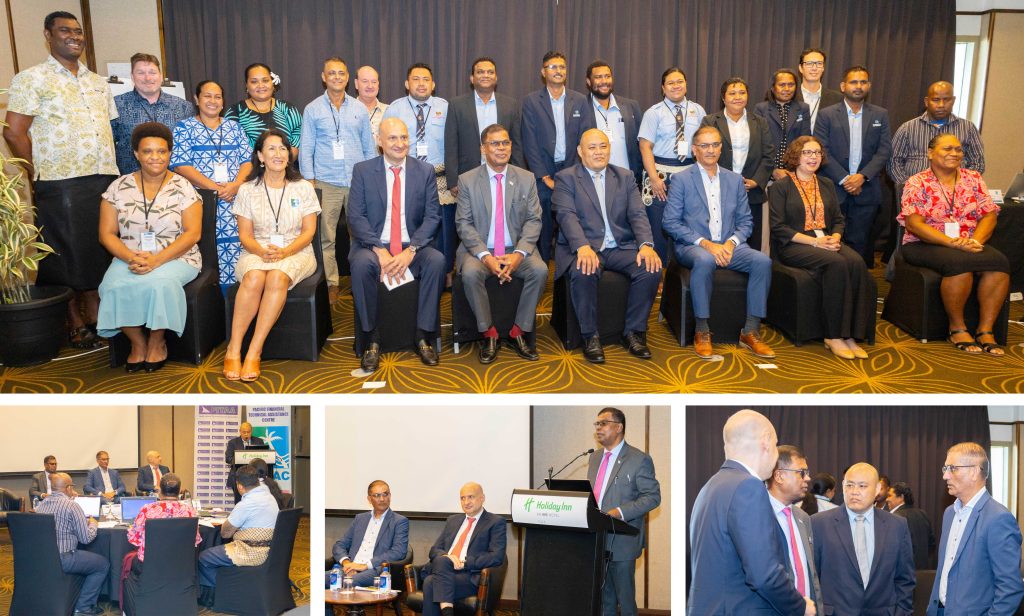
The Australian Border Force (ABF) is conducting a capacity building workshop on Authorised Economic Operator (AEO) Programme for FRCS staff.

The AEO Programme is designed for ‘trusted traders’ who are able to demonstrate consistent quality, compliance and trustworthiness in their supply chain. Under this programme the ‘trusted traders’ are accorded benefits by the Customs administrations to assist in the movement of international cargo.

FRCS CEO, Mr. Udit Singh stated that through the AEO programme, Customs can rely on its partners in the trade community to evaluate and address threats to their own supply chain.

“The risk confronting Customs is reduced. Therefore, companies that demonstrate a verifiable willingness to enhance supply chain security will benefit. Minimising risk in this way helps Customs in performing their security functions, and in facilitating legitimate trade,” Mr. Singh said.

 Fiji currently has seven AEOs and we wish to increase this number. This will not only benefit the business community but also enable us to secure a bigger portion of the supply chain and facilitate greater volume of cargo.

Our CEO also expressed gratitude to ABF and the Australian Government for their continuous support to FRCS.

ABF’s Counsellor, Pacific (Offshore) Network, Superintendent Uriah Turner said over the past year, the ABF has been increasingly working with FRCS on trade related support.

“AEOs are important to enable Customs administrations to effectively work with industry. Established programs can reduce the red tape for trusted traders at the border, and expedite the flow of cargo, which means faster access to market. It is good for the economy and financial health of our countries,” Superintendent Turner stated.

He also encouraged all participants to actively contribute and share ideas to maximise learning. For more information of the Fiji AEO Programme, please click on this link https://frcs.org.fj/our-services/gold-card-services/fiji-authorised-economic-operator-aeo-programme/.


Fiji Joins Global Effort to Combat Tax Evasion

Fiji has officially joined the Group of Twenty (G20)/ Organisation for Economic Co-operation and Development (OECD) Inclusive Framework on Base Erosion and Profit Shifting (BEPS), a global initiative to fight tax avoidance and ensure fair tax practices. This move aligns Fiji with 146 countries working together to promote tax transparency and equity.

Joining the Inclusive Framework helps Fiji improve its international tax reputation. It enhances our chances of being removed from the European Union’s (EU) list of non-cooperative tax jurisdictions, known as the EU Blacklist.

The Fiji Revenue and Customs Service (FRCS), supported by the Fijian Government, is dedicated to implementing the necessary standards and initiatives for greater tax fairness.

As a member of the Inclusive Framework, Fiji has also committed to addressing the tax challenges arising from the economy’s digitalization. Fiji will participate in the Two-Pillar Solution, which aims to reform international tax rules to ensure that multinational enterprises pay a fair share of tax wherever they operate.

OECD Secretary-General Mathias Cormann welcomed Fiji to the framework during its 16th meeting in Paris on May 28, 2024.

FRCS CEO Mr. Udit Singh speaking virtually to the OECD conference this week, emphasised that Fiji’s membership will give the country a stronger voice in global tax discussions and support its national goal of combating tax avoidance.

This step equips Fiji with better tools to ensure profits are taxed where earned, fostering a fairer and more transparent tax system.

ABF Assists FRCS to strengthen legal and policy framework for customs licencing.

In a five-day workshop, the Australian Border Force (ABF) assisted our Customs team to further strengthen the legal and policy framework on Customs licencing.

At the end of the workshop, our Customs team intends to:

  • Develop Customs Broker Demerit Points System.
  • Strengthen the current licencing regime.
  • Develop the continuous professional development program for the brokers.


The workshop allows all participants to engage in a conducive and learning environment where challenges can be discussed, and solutions brainstormed. FRCS appreciates its partnership with the ABF.

LTA, FRCS URGE IMPORTERS OF USED GOODS VEHICLES TO OBTAIN CLEARANCE FOR MODIFICATIONS


The Land Transport Authority (LTA) has urged all importers of used goods vehicles including  Hiace, Vannette and similar vehicles, to acquire prior clearance from the Fiji Revenue and Customs Service (FRCS) when modifying it from a goods to a passenger vehicle, and its subsequent registration with the Authority.


This directive comes amidst the concern on the practice of fitting additional seats on the imported goods vehicles post-Customs clearance, thereby circumventing established controls for passenger vehicles.


LTA and FRCS highlighted that the crux of the matter revolved around the significant disparity in duty rates and import permit restrictions between passenger vehicles and goods vehicles. Passenger vehicles, subject to stringent regulations, are bound by specific criteria, including age restrictions (8 years old) and emission standards (Euro 4). Contrarily,  goods vehicles adhere only to Euro 4 emission standards, presenting a loophole that certain entities exploit.


This deceptive practice not only undermines existing regulatory mechanisms but also poses potential safety hazards and tax evasion risks. By masquerading goods vehicles as passenger vehicles post-Customs clearance, importers evade the higher duty rates and stricter import permit restrictions applicable to passenger vehicles.


“The illegal modification of goods vehicles into passenger vehicles without prior approval from FRCS and LTA compromises safety standards, as these vehicles may not undergo the requisite inspections and assessments mandated for passenger vehicles,” said LTA Acting Chief Executive Officer, Mr. Irimaia Rokosawa.


In response to these concerns, Mr Rokosawa said the Authority would uphold its commitment in maintaining the integrity of Fiji’s transportation regulations and safeguard public safety. The Authority will intensify its monitoring efforts to scrutinise the registration of all imported Hiace Vannette goods vehicles and similar variations to it.


“Any attempt to transform these vehicles into passenger vehicles without prior clearance from the FRCS will be met with stringent enforcement measures. The illicit conversion of goods vehicles into passenger vehicles not only jeopardises public safety but also undermines the fairness and transparency of our regulatory framework.


“The LTA is steadfast in working in partnership with the FRCS to curb these illicit activities and uphold the highest standards of compliance and safety within Fiji’s transportation sector,” Mr Rokosawa said.


FRCS Chief Executive Officer, Mr. Udit Singh also urged importers and stakeholders to adhere to regulatory protocols and ensure full compliance with Customs and transportation regulations.


“As the governing body of motor vehicle import permit, FRCS is in full support of the collaboration with the LTA in the improvement of trade compliance in relation to motor vehicles in Fiji,” Mr Singh said.


He said any attempt to manipulate the classification of vehicles for personal gain would be met with stringent penalties and legal repercussions.

FRCS Launches Debt Management Strategy

The Fiji Revenue and Customs Service (FRCS) officially launched its 2024-2027 Debt Management Strategy this afternoon which will enable FRCS Debt Management team to deliver excellence in debt collection contributing towards national revenue by partnering with the taxpayer community.

Speaking at the launch FRCS CEO, Mr. Udit Singh stated that the Debt Management Strategy was a working document to assist FRCS in having effective collaboration with the taxpayers in assisting them to fulfil their tax obligations promptly.

The Strategy has been developed with the assistance from the Australian Taxation Office (ATO) under the ATO Technical Assistance Program to FRCS.

“On behalf of the FRCS, we value the strong partnership we have established with ATO through the ATO Technical Assistance Program for FRCS, and we appreciate the capacity-building efforts we have received from the ATO over the years,” Mr Singh said.

According to Mr. Singh, Fiji needs all taxpayers to pay the right amount of tax, in full by their due date.

“While our intention is to minimise our debt collection, we also want to be a responsible creditor with our commitment to giving our customers a service that is professional and based on respect and integrity. This also means that we clearly articulate the options and consequences to the taxpayers, especially people who are in problem debt.”

Acknowledging the dedication and effort of all those involved in developing the Debt Management Strategy, Ms. Rebecca Brown, First Secretary, Governance at the Australian High Commission in Fiji stated that the Strategy focused on making it easy for the taxpayers to understand and fulfill their responsibilities and working collaboratively with taxpayers to manage any outstanding tax and customs debt.

“I trust this Strategy will support FRCS to deliver excellence in revenue collection by working the Fijian community, investing in staff, systems and being data driven,” Ms. Brown said.

“The strong and effective partnership between the FRCS and the ATO, has helped to support Fiji in its goal of reducing debt, deliver ongoing economic recovery and joining the global community on Tax Policy and Administration (OCED).”

ATO’s Director International Relations, Capacity Building and Transparency Ms. Gabrielle Jackson highlighted that the debt strategy represented a holistic approach to financial management and compliance.

“It will lead to improved revenue collection, by strengthening customer service and compliance education and support increased voluntary compliance whilst continuing to deliver quality service to FRCS clients and partners. By embracing a data-driven approach, FRCS can enhance its decision-making processes and optimize resource allocation,” Ms. Jackson said.