
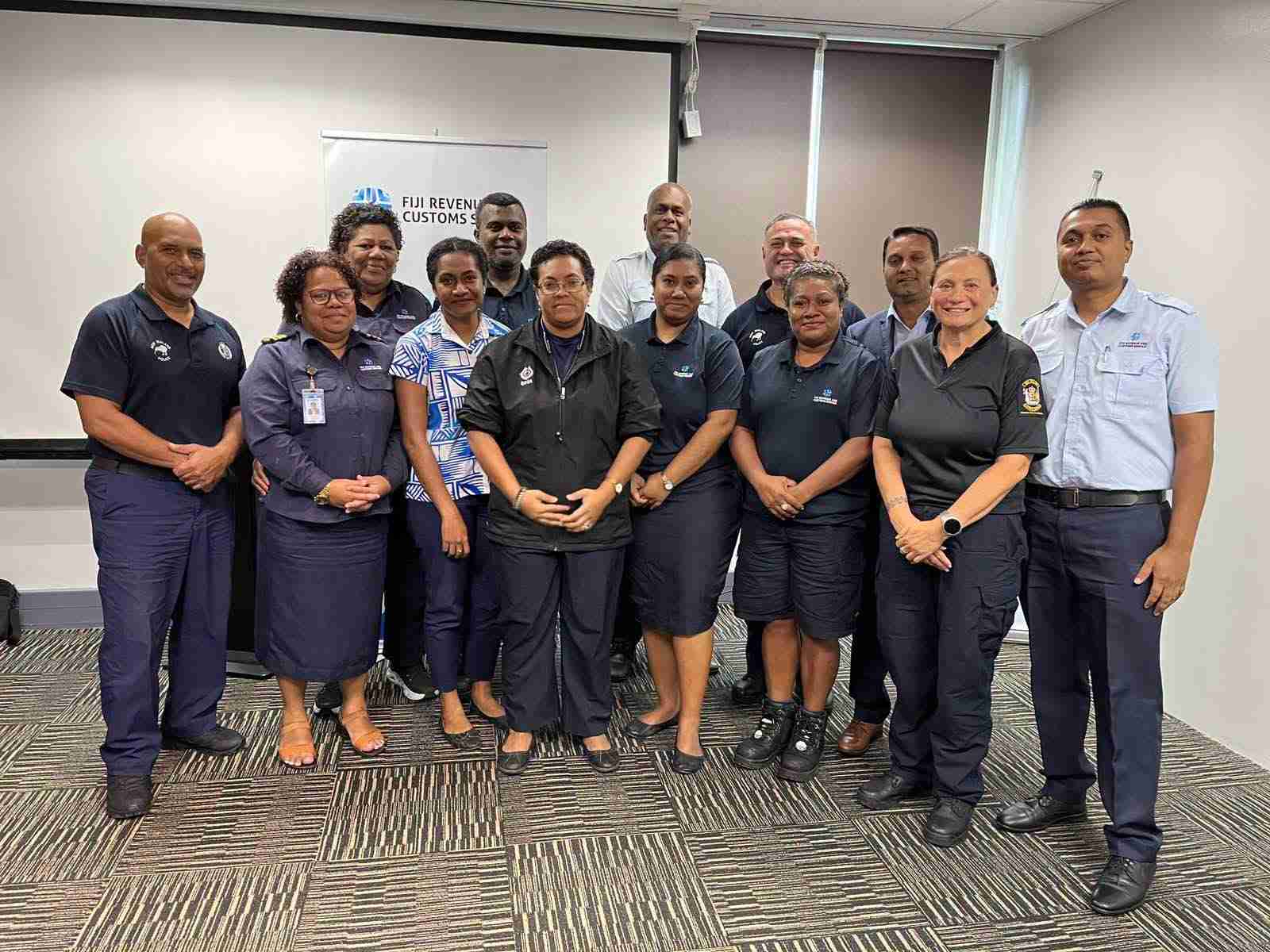
Strengthening Border Security: FRCS Frontline Officers Enhance Detection Skills Through New Zealand-Led Clan Lab Awareness Training
Frontline officers of the Fiji Revenue and Customs Service (FRCS) have strengthened their capabilities in identifying illicit drug manufacturing activities following a specialized Clan Lab Awareness training programme delivered by New Zealand Customs Service, in partnership with the New Zealand Police and supported by the Ministry of Foreign Affairs and Trade (MFAT).
The initiative forms part of ongoing regional cooperation to combat transnational organized crime, particularly the growing threat of methamphetamine production and trafficking across the Pacific.
Designed specifically for frontline border personnel, the awareness sessions focused on equipping officers with the knowledge and practical skills needed to detect indicators of clandestine laboratories (“clan labs”) and related criminal activity. The training highlighted how seemingly ordinary environments, such as warehouse facilities inspected during routine cargo examinations, could potentially be used for illicit drug production.
Participants were guided through the identification of everyday items and imported goods that may be associated with the manufacture of methamphetamine. This included recognizing chemicals, equipment, and materials that, while legitimate in isolation, could signal suspicious activity when found in certain combinations or quantities.
The sessions also explored the various pathways through which illicit substances and precursor materials are smuggled into the country. Officers received targeted insights into risks across cargo shipments, mail streams, unaccompanied baggage, freight consignments, and passenger movements. A key component of the training examined concealment techniques used by criminal networks, with real-life examples demonstrating how methamphetamine can be hidden in unconventional ways.
Visual case studies formed an important part of the programme, including examples from New Zealand. Officers reviewed images and scenarios involving substances concealed in picture frames, impregnated fabrics, and other atypical items. These practical illustrations were aimed at sharpening officers’ ability to identify anomalies and apply risk-based judgement during inspections.
Delivered through interactive presentations and supported by a question-and-answer session, the workshop provided an engaging and informative platform for knowledge exchange. The content underscored the importance of vigilance and informed decision-making at the border, particularly as drug trafficking methods continue to evolve.
The Clan Lab Awareness workshop was conducted at the request of Fiji, reflecting the country’s proactive approach to strengthening border protection measures. It also builds on the strong and longstanding partnership between New Zealand Customs and FRCS. In recent years, this collaboration has included capacity-building initiatives such as intelligence-gathering workshops and the Pacific Leadership Programme delivered in both Nadi and Suva.
New Zealand Customs reaffirmed its commitment to supporting FRCS and acknowledged the value of the close working relationship between the two agencies. Through continued cooperation and shared expertise, both countries aim to enhance regional resilience against organised crime and safeguard the Pacific’s borders.
FRCS expressed its sincere appreciation to New Zealand Customs, the New Zealand Police, and the Government of New Zealand for their continued support and partnership. FRCS acknowledged the significant value of not only the Clan Lab Awareness initiative, but also the broader range of capacity-building programmes delivered in recent years, which have played a critical role in strengthening Fiji’s border security capabilities and advancing regional collaboration.
Last Updated - June 23, 2026