
The Fiji Revenue and Customs Service (FRCS) recognises that tax evasion, customs fraud and smuggling continue to present significant compliance risks to Fiji’s revenue system. The National Risk Assessment (NRA) identified taxation and customs crimes, including smuggling, as a high and increasing threat due to their impact on government revenue, market integrity and their potential links to money laundering and organised criminal activity.
To address these risks, FRCS is strengthening its Compliance Improvement Strategy through targeted risk-based interventions, advanced analytics, enhanced enforcement and greater stakeholder engagement.
Key Compliance Risks Identified
The NRA highlighted several areas of concern:
- Non-declaration and under-declaration of business income and sales.
- VAT fraud and deliberate non-filing of tax returns.
- Customs duty evasion through misclassification and mis-description of imported goods.
- Under-valuation and over-valuation of goods, including trade-based manipulation of invoices.
- Smuggling of prohibited goods, undeclared currency and other illicit items.
- Misuse of companies and business structures to conceal the origins of criminal proceeds.
- Offshore arrangements and related-party transactions used to facilitate tax and customs fraud.
- Compliance challenges among cash-intensive businesses and segments of the MSME sector.
FRCS Strategic Response

Strengthening Data-Driven Compliance
FRCS will continue to expand the use of data analytics, third-party information and transaction-matching technologies to identify inconsistencies between declared income, business activities and customs declarations. These tools support earlier detection of under-reporting, false declarations and suspicious trading patterns.
Enhancing Customs Compliance and Border Integrity

FRCS will strengthen customs compliance activities through:
- Increased cargo profiling and risk-based inspections.
- Improved detection of misclassification and valuation fraud.
- Enhanced monitoring of related-party and high-risk trade transactions.
- Greater collaboration with border agencies and international partners to combat smuggling and illicit trade.
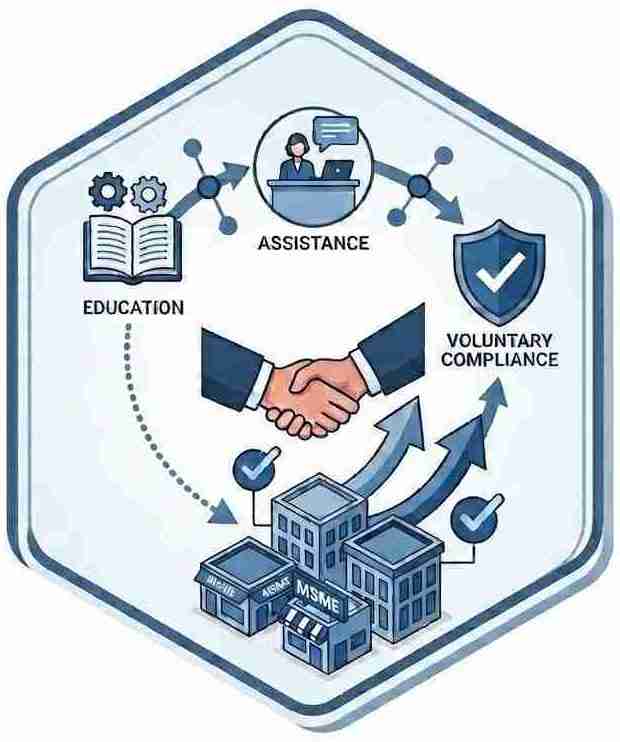
Promoting Voluntary Compliance Among MSMEs
Recognising that many MSMEs face challenges understanding their tax obligations, FRCS will continue providing targeted education, support centres, outreach programmes and digital services to improve registration, filing and payment compliance. Particular focus will be placed on cash-based and emerging business sectors.

Increasing Enforcement Against Deliberate Non-Compliance
FRCS will apply a proportionate but firm compliance approach by:
- Conducting targeted audits based on risk assessments.
- Expanding investigations into serious tax and customs offences.
- Pursuing appropriate penalties where deliberate evasion is identified.
- Strengthening referrals of significant cases for further investigation where criminal conduct is suspected.

Addressing Money Laundering and Financial Crime Risks
Where significant tax evasion, customs fraud or smuggling activity is detected, FRCS will strengthen mechanisms for identifying potential money laundering indicators and collaborate with relevant domestic agencies to support coordinated enforcement action. This includes improving intelligence-sharing and focusing on complex cases involving cross-border transactions, shell companies and unexplained wealth.

Building Capability and Technology
FRCS will continue investing in officer capability, intelligence-led compliance approaches and digital systems to improve compliance monitoring, case management and risk detection. Technology-enabled compliance solutions will support more efficient services while improving the identification of high-risk taxpayers and traders.
This Compliance Improvement Strategy 2025-2028 provides FRCS with a structured and risk-based framework to address the key taxation and customs risks identified in Fiji’s National Risk Assessment. Through enhanced data analytics, targeted compliance interventions, taxpayer education, intelligence-led audits, strengthened border controls, and greater inter-agency collaboration, FRCS will be better positioned to detect, deter and respond to tax evasion, customs fraud, trade-based manipulation, smuggling, and other forms of non-compliance.
By combining voluntary compliance initiatives with proportionate enforcement measures, FRCS seeks to reduce opportunities for deliberate non-compliance while supporting taxpayers to meet their obligations with confidence. These measures will strengthen revenue collection, improve transparency within the tax and customs systems, and enhance the integrity of Fiji’s regulatory environment.
Importantly, the implementation of these strategies will support the mitigation of the high and increasing risks associated with taxation and customs crimes identified in the NRA, including under-declaration of income, VAT fraud, customs duty evasion, trade-based money laundering indicators, and smuggling activities.
As compliance levels improve and risk-based controls mature, FRCS will contribute to a more resilient revenue system, a fairer business environment, and stronger national efforts to combat financial crime and protect Fiji’s economic prosperity.
Last Updated - 4 days ago